As we are celebrating Thanksgiving, I like to remind myself to be grateful for the simple things in life. It was my family's goal this year to find a cozy cabin to get away from the daily rat race and connect with one another in a simpler, yet deeper way.
As we drove through the windy, snow covered mountains of Southern Virginia, we left behind densely developed suburbs, chain stores and light pollution. Our own mobile family pod, listening to the sound track of "Interstellar", playing old fashioned guessing games, while traveling through the darkness on search to find our piece of get away haven.
After causing our car GPS to suffer from major confusion as it tried to keep track of country road coordinates and unchartered Google Map locations, we relied on good old printed directions and our own navigational instincts to find our final destination. The ever so useful smartphone flashlight app guided us down the dark hill towards the entrance of the cabin, only a door seperated us from our holiday retreat: a rustic Appalachian style cabin, evoking a bit of an L.L. Bean commercial in us, black lab mix in tow, wearing fleece shirts in style and cozying up on a woven rocking chair next to the fire place. The digital connection made way for the analog bonding.
It is these quiet, peaceful, slower places on earth that allow me to look inward, to count my blessings and to be completely fulfilled with the pleasures of a simpler life. On our way here, we created a mental list of all the things we wanted to do, a list of all the things that we do not practice often enough, but promised to accomplish during this get away: sit by the fire place and play games - check - family dart competition - check - watching the night sky through the telescope - check - enjoy a cup of hot apple cider on the back porch rocking chairs - check - playing football next to the cabin - check - reading books - check - having a nice Thanksgiving meal as a family - check.
There is nothing I miss, everything that mattes is right around me. No discount big enough would have had me stand in line on Black Friday or sadly, even on Thanksgiving evening. My Black Friday accounted for profits in the family business, writing black numbers for good time and memories.
And as the Black Friday craze seemed to have crossed the Atlantic, showering shoppers in England with amazing bargains, I have found my own deal, to which I don't have to hurry, beat the crowd or rob retail employees of their own ultimate American holiday. I studied business, I get it: in the end, the balance sheet needs to be equal on both sides: your debit side (assets) is where you put your money in, your memories, your time with family and friends - it shows your future, what your money/memories are worth. The other side is your credit, how you funded your assets (either yourself or via other parties), how you made your memories possible. From that point of view, it seems that we have to invest into time with family, into slowing down, increasing our equity, so that we can enjoy our assets for years to come. Keep it simple, keep it balanced.
And as the fire place warms the cozy hut, I unpack the tealights I brought, enjoy my Lebkuchen (German style gingerbread cookies), Mandel Spekulatius (Almond Spice Cookies), a hot cup of Gluehwein (mulled wine) and open the Advent Calender that my mom sent me, guiding me through one of my favorite times of the year.
May your Thanksgiving have been blessed with the wealth of simplicity and be the beginning of a peaceful and joyous holiday season!
Friday, November 28, 2014

Thursday, November 20, 2014
Life is Like a Box of Chocolates
As reform of the U.S. immigration system is in the news again, I pondered the choices that people make each and every day to leave their home country and establish a new life somewhere else. Politics aside, those stories stem from real people with real lives that have stitched the cultural patches of the American quilt.
My own extended family has an immigration background. Both of my parents left the former German Democratic Republic (East Germany) as refugees right before the wall was built. With just a couple of suitcases and the most important documents, they arrived in a West German refugee camp, a country that shared a language with their former home, but not all cultural components. My father's family had to leave behind my aunt, who was expecting her first child and was not able to follow them before the construction of the wall was finished.
My father in law left the impoverished region of post-war Black Forest in Germany in the 50s and arrived under sponsorship in California with one suitecase and $25. He was a trained painter, and knew that going back was not an option. He had to make it work and was able to live the American Dream through hard labor and perseverance.
I am myself an immigrant. Albeit a choice I made not out of economic hardship or political prosecution, but out of love. I went through culture shock, adapted to my new "Wahlheimat" (my chosen home) and emerged as a German-American hybrid of sorts.
Over the years, I found myself drawn to people from different countries, always curious about their reasons for leaving their "Heimat" (home country). Here are a few of the stories that touched my heart:
We will never really know who all these people are whom we categorize as "immigrants", but we owe them one thing: listening to their story. They are human beings, parents, spouses, men and women who oftentimes don't leave their home country because they want to see the world. They leave everything that they have ever known and what meant the world to them because they would otherwise not be able to survive, make a decent living and raise their children. They came for hope, they came for love, they came for a better life. And these are the stories we may hear, if we tune in.
My own extended family has an immigration background. Both of my parents left the former German Democratic Republic (East Germany) as refugees right before the wall was built. With just a couple of suitcases and the most important documents, they arrived in a West German refugee camp, a country that shared a language with their former home, but not all cultural components. My father's family had to leave behind my aunt, who was expecting her first child and was not able to follow them before the construction of the wall was finished.
My father in law left the impoverished region of post-war Black Forest in Germany in the 50s and arrived under sponsorship in California with one suitecase and $25. He was a trained painter, and knew that going back was not an option. He had to make it work and was able to live the American Dream through hard labor and perseverance.
I am myself an immigrant. Albeit a choice I made not out of economic hardship or political prosecution, but out of love. I went through culture shock, adapted to my new "Wahlheimat" (my chosen home) and emerged as a German-American hybrid of sorts.
Over the years, I found myself drawn to people from different countries, always curious about their reasons for leaving their "Heimat" (home country). Here are a few of the stories that touched my heart:
- I have gotten to know refugees from the former Yugoslavia, where a terrible sectarian war in the 1990s and sniper attacks caused a family to leave their beloved town of Sarajevo to ensure a safer life for their 8 year old son. They became our neighbors, we shared a European background and learned to love their coffee culture. Their son became fluent in English practically over night, reciting "Life is like a box of chocolate, you never know what you're gonna get" in that perfect Southern accent by Tom Hanks in "Forest Gump". His father was a former engineer for IBM, who now worked as a pizza delivery man. There was a lot of sadness for leaving their beautiful country which doesn't exist anymore; their son gave them hope and paved the way for a new existense.
- Shortly before the fall of the Soviet Union a young Ukrainian couple was able to come to the U.S. under amnesty consideration. They were both trained teachers, he was an interpreter as well. Years later, they were Ukraininan language instructors for me and my husband, as we were preparing for our move to their country of origin. They slipped small anecdotes from the past into their lessons, such as the one about the aftermath of the Chernobyl accident, where all teachers were asked to report back to school with rubber boots and assist in a school cleaning by hosing down the roof with water. Upon our departure, they gave us their cousin's address, whose family we befriended and who taught us the richness of their culture.
- There is an Ethiopian family, who came to the U.S. via winning the green card lottery, the lucky ticket to come to the land of dreams. As most immigrants, they had to work their way up, get certified again in their professions and push their children to perform at the top of their class in school. They still refer to Ethiopia as their home country, longing to see family and friends, but it is their children's future that keeps them here. There is no alternative, no turning around, just moving forward. I learned about the Ethiopian coffee ceremony, roasting green coffee beans, fake grass scattered across the living room floor to replicate the outdoors and incense burning, filling the house with smoke. I danced Ethiopian dances and practiced ululation, a rapid tongue trill to express strong emotions and learned to love their food, wrapped in injera, the spongy, sourtasting flatbread.
- Another aquaintance of mine left her home country to seek medical help for her son at a major American research university. They left everything behind, their beautiful house, their employment, their belongings, their younger son's toys, their friends and family. Despite not being able to get the medical outcome they had hoped for, they decided to stay for now - one of their older children planning to go to college here. His enrollment status dilemma is a story in itself and shows how difficult it is to navigate the complicated immigration system despite English fluency. The young man is caught between two chairs during the college application process, not qualified as an overseas student, not qualified as an in/out of state student - so what box to check? What does apply? What scholarships is he eligible for?
- My hairdresser is from Korea - a woman who is working hard to get her two children through college and whose faith is deeper than the ocean. She has a little English-Korean dictionary on her table at the hairdresser. In her free time, you will see her reading it, always trying to improve her English just a little bit more. I told her how much I loved living in her home country, a place she has not visited in years. The tickets are too expensive, the journey too long, there is too much work to do here. It visibly pains her when I try to share some of my favourite memories of Korea. So we have decided to find more neutral conversation topics, such as gardening. We talk about how our flowers are in bloom, which ones did not make it through the last winter and which ones are our favorite: I learned she adores daffodils in the spring. I have never seen her garden, but it sounds lovely when she describes it. She is trying to bloom where she was planted, the reasons for her immigration story I will never know.
We will never really know who all these people are whom we categorize as "immigrants", but we owe them one thing: listening to their story. They are human beings, parents, spouses, men and women who oftentimes don't leave their home country because they want to see the world. They leave everything that they have ever known and what meant the world to them because they would otherwise not be able to survive, make a decent living and raise their children. They came for hope, they came for love, they came for a better life. And these are the stories we may hear, if we tune in.
Friday, October 10, 2014
Nobel Peace Prize, Universal Humanity and the Women in My Life
I had the privilege to spend a weekend with some women that like me, have arrived at a point in their life, where your life's path has reached a point where several other pathways branch off, a cross point of achievements, dreams, experiences, goals and regrets. I embrace this moment of choice because it is all about growing and blooming, finding ourselves all over again, in a new light. Reflecting on the past, that gives us roots and allows us to branch out in new directions.
In our wonderful weekend contemplations about womanhood, one of the women pointed out how women in the western world support each other less, resulting in a very insular existence for some, despite gender equality for the most part. By breaking free out of traditional gender roles and emancipate women to break through glass ceilings, ultimately entering the male world, we in the western industrialized world enjoy a tremendous wealth of opportunities. How do we support other women as they are weighing their options? Do we judge their choices and what is true emancipation in a cultural context?
 Emancipation always includes an element of revolution and rebellion against set laws and expectations. There is no one exclusive definition of it, but rather nuances of freedom and rights that find their own place in a culture. I wanted to shed some light on women's liberation from deeply rooted social and cultural norms. Obviously that is the most challenging form of emancipation because it opens up the discussion of universality of humanity versus cultural relativity.
I do agree with Professor Karen Musalo, who was the lead attorney's for Fauziya Kasinga, a teenager from Togo, West Africa, who was granted political asylym in the United States in 1996 based on the basis of gender related persecution of women (source: http://www.scu.edu/ethics/publications/iie/v8n3/rightsandcultures.html). This case was a precedence since it granted political asylum in the United States to protect Kasinga from tribal marriage rituals in her home country of Togo.
Today, another young woman, Malala Yousafzai, made history for receiving the 2014 Nobel Peace Price (along with Kailash Satyarthi documenting and fighting child labor; http://nobelpeaceprize.org/) for speaking up about girl's education. Blogging about these issues is what caught the Taliban's attention on Malala's outspokenness and their determination to silence her. We know now, that Malala's voice is louder than ever. Her past has shaped her future and inspires girls around the world.
Breaking through tribal rules, religious beliefs, gender-based laws and corporate glass ceilings is what brings women around the world together under one goal: to be treated equally. Leaving our insular existence behind as we come to the crossroads of life, women need other women to cheer them on, to validate their choices and build supportive communities. Female nature is to nurture and to protect, to allow the seed to grow and the flower to blossom where planted. It is not what we stand up for or what choices we make, it is about being heard as an equal. Only then can universal humanity override cultural relativity. No more mommy wars, no more child brides, no more woman's trafficking, no more shariah law punishments, no more preference of unborn boys over unborn girls.
As I look at the women in my life, I am continuously astonished and humbled by their strength and courage: the mother, who left her home country with her son under asylym to escape sniper attacks in Sarajevo; the woman that battles physical pain every day because there is no cure; the woman that goes back to school in her 40s to learn English, the woman that decides to leave an abusive relationship with her two young daughters; the woman that starts her own business; the woman who loves another woman; the woman that allows her daughters to take off their veil and let their long hair fall over their shoulder; the mother who is making her house a home; the woman who wrote poems that were never published; the woman who is a trailblazer in a male dominated profession; the woman whose partner is deployed; the woman that sat in bomb shelters for hours; the woman that listens and understands; the woman who gives unconditionable love each and every day.
There is no right or wrong, but resilience to accept the choices we have made and give meaning to our lives. If we are able to acknowledge that in each other, we have truly reached liberation of women and for women.
In our wonderful weekend contemplations about womanhood, one of the women pointed out how women in the western world support each other less, resulting in a very insular existence for some, despite gender equality for the most part. By breaking free out of traditional gender roles and emancipate women to break through glass ceilings, ultimately entering the male world, we in the western industrialized world enjoy a tremendous wealth of opportunities. How do we support other women as they are weighing their options? Do we judge their choices and what is true emancipation in a cultural context?
Emancipation always includes an element of revolution and rebellion against set laws and expectations. There is no one exclusive definition of it, but rather nuances of freedom and rights that find their own place in a culture. I wanted to shed some light on women's liberation from deeply rooted social and cultural norms. Obviously that is the most challenging form of emancipation because it opens up the discussion of universality of humanity versus cultural relativity. I do agree with Professor Karen Musalo, who was the lead attorney's for Fauziya Kasinga, a teenager from Togo, West Africa, who was granted political asylym in the United States in 1996 based on the basis of gender related persecution of women (source: http://www.scu.edu/ethics/publications/iie/v8n3/rightsandcultures.html). This case was a precedence since it granted political asylum in the United States to protect Kasinga from tribal marriage rituals in her home country of Togo.
Today, another young woman, Malala Yousafzai, made history for receiving the 2014 Nobel Peace Price (along with Kailash Satyarthi documenting and fighting child labor; http://nobelpeaceprize.org/) for speaking up about girl's education. Blogging about these issues is what caught the Taliban's attention on Malala's outspokenness and their determination to silence her. We know now, that Malala's voice is louder than ever. Her past has shaped her future and inspires girls around the world.
Breaking through tribal rules, religious beliefs, gender-based laws and corporate glass ceilings is what brings women around the world together under one goal: to be treated equally. Leaving our insular existence behind as we come to the crossroads of life, women need other women to cheer them on, to validate their choices and build supportive communities. Female nature is to nurture and to protect, to allow the seed to grow and the flower to blossom where planted. It is not what we stand up for or what choices we make, it is about being heard as an equal. Only then can universal humanity override cultural relativity. No more mommy wars, no more child brides, no more woman's trafficking, no more shariah law punishments, no more preference of unborn boys over unborn girls.
As I look at the women in my life, I am continuously astonished and humbled by their strength and courage: the mother, who left her home country with her son under asylym to escape sniper attacks in Sarajevo; the woman that battles physical pain every day because there is no cure; the woman that goes back to school in her 40s to learn English, the woman that decides to leave an abusive relationship with her two young daughters; the woman that starts her own business; the woman who loves another woman; the woman that allows her daughters to take off their veil and let their long hair fall over their shoulder; the mother who is making her house a home; the woman who wrote poems that were never published; the woman who is a trailblazer in a male dominated profession; the woman whose partner is deployed; the woman that sat in bomb shelters for hours; the woman that listens and understands; the woman who gives unconditionable love each and every day.
There is no right or wrong, but resilience to accept the choices we have made and give meaning to our lives. If we are able to acknowledge that in each other, we have truly reached liberation of women and for women.
Thursday, September 4, 2014
Foreign Students, Global Ambassadors and Fun, Fun, Elmo!
Today's radio broadcast on the Kojo Nnamdi Show, aired on WAMU, my lifeline to the world and critical issues, stirred up a strong emotion in me about how insular our view of the world and its inhabitants is. The topic of the show was the enrollment of foreign students in universities in the Washington DC area (for a podcast of the show go to http://thekojonnamdishow.org/).
According to data by the U.S. Immigration and Customs Enforcement from January 2014, by far most of the foreign students in the United States came from China, India, South Korea, Saudi Arabia, Japan and Taiwan:

A panel of experts connected the enrollment numbers to our local economy, immigration politics, STEM (Science, Math, Engineering, Math) workforce and global world at large. One caller's view struck a chord in me, which caused me to blog on this issue. Specifically, the caller spoke out of fear that these students were taking "our" education "away" which "we" built. The panel was speechless, scrambling for a reaction, as I was trying to understand my own sudden reaction to this topic.
One of the panelists, Neil Ruiz, a Senior Analyst and Associate Fellow, Metropolitan Policy Program at the Brookings Institution, made one very important point in my opinion: he viewed these foreign students as true global ambassadors, that might go back to their home countries, where they apply their new skills and directly influence their domestic economy.
Factually speaking, the United States still offers highly valued graduate and post graduate education, which attracts qualified students from around the globe, albeit still only making up about 4% of the total students body in those universities. Our sons and daughters learn problem solving with classmates from different backgrounds in elementary school already. We should embrace international students bodies at universities more, as no free nation in the world stands alone in its attempt to solve global issues. Diversity and globalization go hand in hand. If we want to tackle the biggest challenge, that humanity has ever faced, namely global warming, we need to collaborate, align our STEM resources and share knowledge, not preventing others from riding along on the learning curve.
By enrolling foreign students in American universities, we invest into the future of their home countries. Study abroad opportunities empower women to gain a higher education, create global networks and foster research in critical areas. Our university bound sons and daughters will benefit through increased global awareness and connecting to people in their field of study from around the world. Politicians and companies's CEOs collaborate all the time, academia should be the third component of interconnectedness.
The local economy benefits from foreign students in much the same way as from tourism in this region. Restaurants, taxi companies, bike rentals, entertainment centers, etc. base their existence on students in general. Foreign students might even be more interested in experiencing American culture first hand and thus immerse themselves more into the local economy.
I understand this discussion can not go without shedding light on the validity of our immigration politics. But I would much rather put the power into the communities in which our children grow up in. It is here, where the change has to happen, so that we don't live in a fear driven world. The strength of the educational system in the United States has always been its community aspect. "It takes a village to raise a child", Hillary Clinton once said. I will state: "It takes a world to raise a child". My plea for education is simple: teach foreign languages as a core subject from an early age on, place globes and world maps in classrooms and continue to organize intercultural events at schools and universities.
And let's be honest, with Public Diplomacy, Hollywood and Sesame Street, young students abroad learn about the United States and what is/might be "typical American". I remember brochures by "EF Tours" (Education First) lying in my German high school's subschool office. I was intrigued by the possibility of spending a high school year abroad. However, it was not until college, where an internship in Los Angeles taught me the challenges of the medical technology market and ultimately led me to research this topic more as part of my master thesis.
The effect of globalization on education might be represented through this cute video clip by Sesame Street's character "Elmo". In the video "Fun, Fun, Elmo", the red fuzzy character teaches basic Mandarin Chinese, all on scene what I might think of a typical street in New York:
My intent of including this video is to demonstrate that we have adopted parts of other cultures so well into our American society, it might be time for other countries to do the same. Education is the basis for all economic development and can be a great equalizer among nations and ultimately lead to regional stability.
According to data by the U.S. Immigration and Customs Enforcement from January 2014, by far most of the foreign students in the United States came from China, India, South Korea, Saudi Arabia, Japan and Taiwan:
Source: SVEP (Student and Exchange Visitor Information System)
One of the panelists, Neil Ruiz, a Senior Analyst and Associate Fellow, Metropolitan Policy Program at the Brookings Institution, made one very important point in my opinion: he viewed these foreign students as true global ambassadors, that might go back to their home countries, where they apply their new skills and directly influence their domestic economy.
Factually speaking, the United States still offers highly valued graduate and post graduate education, which attracts qualified students from around the globe, albeit still only making up about 4% of the total students body in those universities. Our sons and daughters learn problem solving with classmates from different backgrounds in elementary school already. We should embrace international students bodies at universities more, as no free nation in the world stands alone in its attempt to solve global issues. Diversity and globalization go hand in hand. If we want to tackle the biggest challenge, that humanity has ever faced, namely global warming, we need to collaborate, align our STEM resources and share knowledge, not preventing others from riding along on the learning curve.
By enrolling foreign students in American universities, we invest into the future of their home countries. Study abroad opportunities empower women to gain a higher education, create global networks and foster research in critical areas. Our university bound sons and daughters will benefit through increased global awareness and connecting to people in their field of study from around the world. Politicians and companies's CEOs collaborate all the time, academia should be the third component of interconnectedness.
The local economy benefits from foreign students in much the same way as from tourism in this region. Restaurants, taxi companies, bike rentals, entertainment centers, etc. base their existence on students in general. Foreign students might even be more interested in experiencing American culture first hand and thus immerse themselves more into the local economy.
I understand this discussion can not go without shedding light on the validity of our immigration politics. But I would much rather put the power into the communities in which our children grow up in. It is here, where the change has to happen, so that we don't live in a fear driven world. The strength of the educational system in the United States has always been its community aspect. "It takes a village to raise a child", Hillary Clinton once said. I will state: "It takes a world to raise a child". My plea for education is simple: teach foreign languages as a core subject from an early age on, place globes and world maps in classrooms and continue to organize intercultural events at schools and universities.
And let's be honest, with Public Diplomacy, Hollywood and Sesame Street, young students abroad learn about the United States and what is/might be "typical American". I remember brochures by "EF Tours" (Education First) lying in my German high school's subschool office. I was intrigued by the possibility of spending a high school year abroad. However, it was not until college, where an internship in Los Angeles taught me the challenges of the medical technology market and ultimately led me to research this topic more as part of my master thesis.
The effect of globalization on education might be represented through this cute video clip by Sesame Street's character "Elmo". In the video "Fun, Fun, Elmo", the red fuzzy character teaches basic Mandarin Chinese, all on scene what I might think of a typical street in New York:
My intent of including this video is to demonstrate that we have adopted parts of other cultures so well into our American society, it might be time for other countries to do the same. Education is the basis for all economic development and can be a great equalizer among nations and ultimately lead to regional stability.
Saturday, August 23, 2014
Social Media, Information Poverty and Sworn Sisters
Quick, quick, can you name all the media sites, through which you or an organization can connect to others and share content? Here is a little cheat sheet: Facebook, Twitter, Pinterest, YouTube, Flickr, Vine, LinkedIn, RenRen, QQ, Sina, etc. Most likely, we all have used at least one of these social media sites to connect with others in order to share an organization's profile (product placement) or our own profile ("self placement"). The world seems to have become smaller, friends and family closer, the global population more informed and opinionated. We use logos and symbols to share our deepest beliefs and embrace cyberspace as a medium of self-expression. Events are easily marketed through social media, online fundraising is casting a wider net and privacy issues are challenged with every click. We experience a sense of information overload or an urge to always be up to date, being connected, not able to be without any electronic device feeding us the latest news.
Part of the reason for this permanent urge to connect is the speed at which information is disseminated. Information is knowledge. Knowledge is power. Just imagine for a moment that the Ebola virus ravages through your immediate region: emergency notifications would be reaching you within seconds because we have signed up to receive them through respective infrastructure channels. You would be able to search the CDC website for precautions; schools and office closings would follow and supermarkets would experience a rush for basic non perishable food items. Not so in West Africa, where the epidemic has a grip on several countries. City residents might have access to some news coverage, but rural areas are so remote and off the grid, that it is not a choice to be offline, but rather a sad and devastating reality. The global inequality of access to the internet becomes very apparent in situations like this, resulting in a different type of poverty, in "information poverty". Instead of twitter feeds, pinterest pins and facebook posts, handwritten warning signs on cardboard are held up by people as they are riding on pick up trucks through remote villages in order to share the information about the virus. Information is knowledge. Knowledge saves lives. How fast can we pass on information, so that more lives can be saved, more myths and beliefs about disease prevention be debunked?
All through history, mankind has always shared information that we validated as vital for someone to know. Smoke and lamp signals, hieroglyphics, individual letter printing press, pony express and pigeon airmail all served that purpose. Later on, telegraph, telephone, fax, and emails took over, so social media is just an innovative extension of sharing information. We always determined who and who is not the recipient of that information, given the premises that the recipients is literate or can decipher the message.
Secret languages, coding and cyber security are byproducts of this technological advancement. What struck me as a fascinating secret language was a "women's only" language from 19th century China, called Nu shu (translated as "women's writing"), that was not discovered until the 1960s. This linguistic gem took the world by surprise in that it was an entirely different written language than traditional Chinese. A language invented by women for other women, the sworn sisters, as described in Lisa See's book "Snowflower and the Secret Fan".
The secret language was embroidered on handkerchiefs, hidden in weavings and painted in the folds of fan, which found their way outside the compound walls, behind which these women were living in total isolation. It is extraordinary that this language existed for hundreds of years, hidden from the eyes of men, representing a form of emancipation in a time, when women's lives were more limited that we can fathom today. And at the same time, each hidden message inside a fan or handkerchief is like a facebook post, a glimpse into a day, the description of emotions following the statement - only without the smiley face symbols and snapshots of our adorable offsprings.
With the most recent upheavals around the world, I reevaluated the need for social media. Going back to my thought in previous blogs, about the Maslow Pyramid of Needs, I feel that the use of social media greatly depends on the socioeconomic rung on the global ladder a country has reached. The more of the basic needs are met, the more the individual uses social media for the individualistic purpose of self presentation. The further down on the Maslow Pyramid of Needs a country finds itself, the more these sites are used to raise awareness for the political and/or economic struggles under which the population lives, a sort of cyber revolution. Instead of cute kittens, we might see a video of a military attack.
Despite the criticism of social media, its use and applications, it is a tool for the global population to come together by choice. It is in our human nature to connect with others. Communicating with others broadens our understanding of each other, allows us to look at things from a different perspective and might even leave behind a human milestone in the historic continuum. And if you choose not to connect, there is always the option of going offline for a while - but it remains a free choice of an individual and should be available to all. It is a part of the freedom of speech and part of self-preservation, as much as the human connection. The next time you google, tweet or pin, appreciate the wealth of information that is available to you at your fingertip.
Part of the reason for this permanent urge to connect is the speed at which information is disseminated. Information is knowledge. Knowledge is power. Just imagine for a moment that the Ebola virus ravages through your immediate region: emergency notifications would be reaching you within seconds because we have signed up to receive them through respective infrastructure channels. You would be able to search the CDC website for precautions; schools and office closings would follow and supermarkets would experience a rush for basic non perishable food items. Not so in West Africa, where the epidemic has a grip on several countries. City residents might have access to some news coverage, but rural areas are so remote and off the grid, that it is not a choice to be offline, but rather a sad and devastating reality. The global inequality of access to the internet becomes very apparent in situations like this, resulting in a different type of poverty, in "information poverty". Instead of twitter feeds, pinterest pins and facebook posts, handwritten warning signs on cardboard are held up by people as they are riding on pick up trucks through remote villages in order to share the information about the virus. Information is knowledge. Knowledge saves lives. How fast can we pass on information, so that more lives can be saved, more myths and beliefs about disease prevention be debunked?
All through history, mankind has always shared information that we validated as vital for someone to know. Smoke and lamp signals, hieroglyphics, individual letter printing press, pony express and pigeon airmail all served that purpose. Later on, telegraph, telephone, fax, and emails took over, so social media is just an innovative extension of sharing information. We always determined who and who is not the recipient of that information, given the premises that the recipients is literate or can decipher the message.
With the most recent upheavals around the world, I reevaluated the need for social media. Going back to my thought in previous blogs, about the Maslow Pyramid of Needs, I feel that the use of social media greatly depends on the socioeconomic rung on the global ladder a country has reached. The more of the basic needs are met, the more the individual uses social media for the individualistic purpose of self presentation. The further down on the Maslow Pyramid of Needs a country finds itself, the more these sites are used to raise awareness for the political and/or economic struggles under which the population lives, a sort of cyber revolution. Instead of cute kittens, we might see a video of a military attack.
Despite the criticism of social media, its use and applications, it is a tool for the global population to come together by choice. It is in our human nature to connect with others. Communicating with others broadens our understanding of each other, allows us to look at things from a different perspective and might even leave behind a human milestone in the historic continuum. And if you choose not to connect, there is always the option of going offline for a while - but it remains a free choice of an individual and should be available to all. It is a part of the freedom of speech and part of self-preservation, as much as the human connection. The next time you google, tweet or pin, appreciate the wealth of information that is available to you at your fingertip.
Thursday, June 12, 2014
Maslow's Pyramid of Needs, Environmental Stewardship and I.V. Bags for Trees
I love starting my days with a walk along our neighborhood lake, immersing myself into the rich hues of greens and the scent of honeysuckle and wild roses. The walk only takes 20 minutes out of my morning before work, but they are 20 minutes of peace, inner contemplation and being one with Mother Earth, providing mental nourishment for a day - my green time does not require golf club memberships.
In a recent article about the Mekong River, I gathered that the English name of this mighty river system is derived from the Lao and Thai name "Mae Nam Khong" , meaning Mother of Water. I found it fascinating how we maternalize nature, clearly suggesting that nature is giving us life and nurtures us. Across all indigenous people and religions, Mother Earth plays a central role about understanding where we come from, and that life has been given to us, a gift that is to be cherished.
In my part of the world, nature fulfills our recreational needs, which when I look at it from a global perspective, is somewhat of a luxury. In the eye of climate change and ongoing industrialization of populous countries, it seems that preserving nature and feeding people is only going to become a greater worldwide challenge, which the developed nations must be willing to face. Unsustainable investment in the name of globalization is not the answer.
The rather utilitarian use of nature (i.e. using natural resources for survival) stands in stark contrast to viewing nature in Western nations as a place to be protected, a place for sheer enjoyment and relaxation from our rat race lives. Obviously, as poverty decreases, the recreational use of the outdoor space increases, much like in the Pyramid of Needs (Hierarchy of Needs) by the psychologist Abraham Maslow, which describes the levels of human motivation based on meeting needs. In accordance with this theory, one can transfer the different levels of needs to any situation that requires human motivation in order to jump up to the next level until we reach the highest level of human motivation: self-actualization.

Getting back to global economic development and its impact on nature and the planet at large, we find ourselves in the midst of the most challenging time to align economic growth with environmental stewardship. Some people claim this to be a time of national security as well, a global darwinism over natural resources feeding our hunger for gains in GDP, factory output and food production. So, how do we all as whole, protect Mother Earth and what changes in our own lives are we willing to make?
Most of the world still operates along an agricultural bell curve, where an increased input eventually leads to a diminished output. food and clean water are the most basic needs for a human being along with shelter and safety. As long as people are "stuck" on these two levels of Maslow's pyramid, the chances for advancing upward are low, nature remains a sometimes unforgiving companion, not giving enough, not nurturing, not a place for recreation. Darwin's and Maslow's theories intersect in these instances.
International aid programs and non-government organizations focus on these basic needs and lift people out of poverty and into the higher levels of self-awareness and self-actualization. Logically, if we are not able to fight poverty and safety, we can not expect people to become stewards for the environment, because natural resources will only be consumed for survival, no self-motivation to preserve it.
I envision better environmental partnerships between wealthy and emerging countries, a platform for exchanging scientific findings and best practices. Tied into these partnerships need to be educational opportunities for teachers, professors and students to increase awareness, teach advocacy and proactiveness. When people feel empowered, they pool their human resources and engage themselves in problem solution.
The UN Global Impact initiative (http://www.unglobalcompact.org/AboutTheGC/index.html) works with businesses around the world to ensure sustainable and inclusive economic growth within the framework of ten principles in the areas of human rights, the environment, labor and anti-corruption. This voluntary and network-based organization is able to operate in a non-bureaucratic environment, connecting the UN to the private sector.
Environmental stewardship and sustainability is a responsibility we all share. We might just be pulling at different points of the same rope, but we are all pulling our own weight. Industrial nations need to lead with promoting best practices locally and abroad. Using poor countries as a way to clean up our own mess, e.g. e-waste, by shipping electronic trash to places in Africa and Southeast Asia, where children pick through the electronic waste for valuable metals that can be recycled for a few dollars, while exposing themselves to toxins is not just unacceptable, but very short sighted. The problem here is the lack of law on our part to prevent this type of activity and the millions of poor people on the other hand trying to make a living under dire and corrupt circumstances.
Everyone of us can make small changes in our daily life, how we consume, what we consume and how we teach the next generation of environmental stewards. It takes one spark to ignite a passion in someone somewhere. Another organization, "Eco Tipping Points" ( http://www.ecotippingpoints.org/photo-video.html) collects local stories from around the world, where individuals and/or small communities found ways to live more sustainable. This is the momentum needed to activate people directly in their communities, to bring their challenges and projects to the surface for greater global collaboration.
A personal encounter comes to my mind, a visit to a Buddhist temple in South Korea, where a huge tree adorned the center of the temple grounds.

An IV bag stuck in its trunk, as if the monks wanted to make sure that the tree survives or is healed. A tree of life, lovingly cared for.
My hope is that people will continue to love nature, see the beauty in it and find peace. Only if we really learn to love the outdoors, are we willing to take on stewardship and make the political, economic and personal changes necessary to sustain our planet's intricate balance. It all starts with a community effort, reusing materials, consume fewer resources, a stream cleanup, storm drain labeling, etc. Every small effort has an effect somewhere in the world - after all there is only one Mother Earth.
In a recent article about the Mekong River, I gathered that the English name of this mighty river system is derived from the Lao and Thai name "Mae Nam Khong" , meaning Mother of Water. I found it fascinating how we maternalize nature, clearly suggesting that nature is giving us life and nurtures us. Across all indigenous people and religions, Mother Earth plays a central role about understanding where we come from, and that life has been given to us, a gift that is to be cherished.
In my part of the world, nature fulfills our recreational needs, which when I look at it from a global perspective, is somewhat of a luxury. In the eye of climate change and ongoing industrialization of populous countries, it seems that preserving nature and feeding people is only going to become a greater worldwide challenge, which the developed nations must be willing to face. Unsustainable investment in the name of globalization is not the answer.
The rather utilitarian use of nature (i.e. using natural resources for survival) stands in stark contrast to viewing nature in Western nations as a place to be protected, a place for sheer enjoyment and relaxation from our rat race lives. Obviously, as poverty decreases, the recreational use of the outdoor space increases, much like in the Pyramid of Needs (Hierarchy of Needs) by the psychologist Abraham Maslow, which describes the levels of human motivation based on meeting needs. In accordance with this theory, one can transfer the different levels of needs to any situation that requires human motivation in order to jump up to the next level until we reach the highest level of human motivation: self-actualization.
Most of the world still operates along an agricultural bell curve, where an increased input eventually leads to a diminished output. food and clean water are the most basic needs for a human being along with shelter and safety. As long as people are "stuck" on these two levels of Maslow's pyramid, the chances for advancing upward are low, nature remains a sometimes unforgiving companion, not giving enough, not nurturing, not a place for recreation. Darwin's and Maslow's theories intersect in these instances.
International aid programs and non-government organizations focus on these basic needs and lift people out of poverty and into the higher levels of self-awareness and self-actualization. Logically, if we are not able to fight poverty and safety, we can not expect people to become stewards for the environment, because natural resources will only be consumed for survival, no self-motivation to preserve it.
I envision better environmental partnerships between wealthy and emerging countries, a platform for exchanging scientific findings and best practices. Tied into these partnerships need to be educational opportunities for teachers, professors and students to increase awareness, teach advocacy and proactiveness. When people feel empowered, they pool their human resources and engage themselves in problem solution.
The UN Global Impact initiative (http://www.unglobalcompact.org/AboutTheGC/index.html) works with businesses around the world to ensure sustainable and inclusive economic growth within the framework of ten principles in the areas of human rights, the environment, labor and anti-corruption. This voluntary and network-based organization is able to operate in a non-bureaucratic environment, connecting the UN to the private sector.
Environmental stewardship and sustainability is a responsibility we all share. We might just be pulling at different points of the same rope, but we are all pulling our own weight. Industrial nations need to lead with promoting best practices locally and abroad. Using poor countries as a way to clean up our own mess, e.g. e-waste, by shipping electronic trash to places in Africa and Southeast Asia, where children pick through the electronic waste for valuable metals that can be recycled for a few dollars, while exposing themselves to toxins is not just unacceptable, but very short sighted. The problem here is the lack of law on our part to prevent this type of activity and the millions of poor people on the other hand trying to make a living under dire and corrupt circumstances.
Everyone of us can make small changes in our daily life, how we consume, what we consume and how we teach the next generation of environmental stewards. It takes one spark to ignite a passion in someone somewhere. Another organization, "Eco Tipping Points" ( http://www.ecotippingpoints.org/photo-video.html) collects local stories from around the world, where individuals and/or small communities found ways to live more sustainable. This is the momentum needed to activate people directly in their communities, to bring their challenges and projects to the surface for greater global collaboration.
A personal encounter comes to my mind, a visit to a Buddhist temple in South Korea, where a huge tree adorned the center of the temple grounds.
An IV bag stuck in its trunk, as if the monks wanted to make sure that the tree survives or is healed. A tree of life, lovingly cared for.
My hope is that people will continue to love nature, see the beauty in it and find peace. Only if we really learn to love the outdoors, are we willing to take on stewardship and make the political, economic and personal changes necessary to sustain our planet's intricate balance. It all starts with a community effort, reusing materials, consume fewer resources, a stream cleanup, storm drain labeling, etc. Every small effort has an effect somewhere in the world - after all there is only one Mother Earth.
Thursday, April 17, 2014
The Dandelion - Metamorphosis and Resilience
The Dandelion
In my opinion, the dandelion is a very tough plant! Not only, because it defies any gardener's good intention of eradicating it, but because it goes through an amazing and beautiful transformation, that is hidden inside its core. The tiniest of cracks might provide a dandelion seed with enough space in order to take root, thrive, grow and produce a beautiful yellow flower.
I remember growing up in the rural Black Forest in Germany, where grass fields would turn into yellow carpets in the spring. We used to collect the dandelion's golden flowers and create necklaces and headbands from them. They were a sign of winter's end, of a new season to start, of being able to wear short socks with our skirts.
Later, when my first son was about two years old, he had a German children's book about a ladybug living on a dandelion flower. The petals provided him with a safe home as they closed around the bug's body every night. One day, the flower would not open, worrying the ladybug. The inevitable and beautiful transformation of the yellow flower to a silver fluff ball, was illustrated by each seed flying off with its own sparkling umbrella. My son loved to run his little fingers over the shiny page. It was beautiful, and it was the beginning of a great journey, that would end possibly again on a meadow or in a crack in the sidewalk, only to produce another yellow flower that would send tiny messengers out into the world to tell its story.

"Bloom, where you are planted!", is what each seed could have said. This is not only the story of a flower, but of perseverance and strength.
In my opinion, the dandelion is a very tough plant! Not only, because it defies any gardener's good intention of eradicating it, but because it goes through an amazing and beautiful transformation, that is hidden inside its core. The tiniest of cracks might provide a dandelion seed with enough space in order to take root, thrive, grow and produce a beautiful yellow flower.
I remember growing up in the rural Black Forest in Germany, where grass fields would turn into yellow carpets in the spring. We used to collect the dandelion's golden flowers and create necklaces and headbands from them. They were a sign of winter's end, of a new season to start, of being able to wear short socks with our skirts.
Later, when my first son was about two years old, he had a German children's book about a ladybug living on a dandelion flower. The petals provided him with a safe home as they closed around the bug's body every night. One day, the flower would not open, worrying the ladybug. The inevitable and beautiful transformation of the yellow flower to a silver fluff ball, was illustrated by each seed flying off with its own sparkling umbrella. My son loved to run his little fingers over the shiny page. It was beautiful, and it was the beginning of a great journey, that would end possibly again on a meadow or in a crack in the sidewalk, only to produce another yellow flower that would send tiny messengers out into the world to tell its story.
"Bloom, where you are planted!", is what each seed could have said. This is not only the story of a flower, but of perseverance and strength.
Sunday, December 22, 2013
From Elves and Algorithms to Inner Peace and Happy Holidays
At my recent book club, we read the short story "SantaLand Diaries" out of David Sedaris's book "Holiday on Ice", a story about behind the scenes revelations of an elf at Macy's SantaLand during the busy holiday season, when the anguish of waiting in line for hours to have one's picture taken with Santa rises exponentially as the Christmas season progresses.
This rather exaggerated but true to life account of a holiday tradition symbolized for me how hard it is to cherish this special time of the year, without getting lost in the commercial craze. Why is it so hard for us to slow down, to look inward and feel the joy that the holiday season brings, all the while forgetting to value things and people to which no monetary unit can be attached? We are globally so used to express everything in numbers, analyze statistics and utilizing algorithms in our daily life without knowing so. I am convinced that a well-written algorithm could even lower the anguish in Macy's SantaLand by optimizing the line movement in relativity to the demand of Santa pictures. For all I know an app would be helpful to inform us about the average waiting time at any given moment.
In a recent conversation, someone pointed out to me that through our tendency to consider life's measurable units (such as GDP, SAT scores, income, etc.) more valuable, we depreciate the quality of life, because we just can't express it in numbers. That got me thinking about how we define happiness, especially during this time of the year, when we wish each other Happy Holidays, Merry Christmas and Happy New Year. Children's wishlists are listing items that are exorbitantly high in price, holiday budgets are stretched, stress levels in families increase in an attempt to recreate the happy family get-togethers that marketing executives sell us starting in September. It could all be so much easier for us if we tried consciously to slow down, look inward and create an atmosphere in our daily routines that allows us to open up for the spirit of the season.
I firmly believe that we have lost the ability to cherish the simple things in life, that touch our hearts and souls and feed us after the last present was unwrapped. Less is indeed more, and I go back to my previous blog about choices that we need to make for ourselves, regardless of what the popular opinion seems to stipulate. I remember years back, when I was working in a retail store during the holiday shopping season, how challenging it was to keep my spirit of the season soaring, until an acquaintance sent me a recording of Johann Sebastian Bach's Christmas Oratorio. During my 10 minute commute to the mall, this festive piece of music helped me zoom in on what did matter to me the most at that time, a classical tune to tune out all other sounds around me for a few minutes.
Peace on Earth is our wish to the world this season, and yet it seems to be so out of reach, dividing nations over religious and tribal conflicts. Attaining and sustaining peace is almost like taking apart a Rube Goldberg machine, an elaborate chain reaction contraption where everything is connected and in balance until the first piece starts to move. Happiness can create peace and perfect balance. So, what makes us happy, and how do we measure it to find out we have reached that just right amount that sustains peace on earth? The small country of Bhutan seems to have taken this concept to the highest level, developing the Gross National Happiness (not the Gross National Product), giving this non-economic index true value (http://www.grossnationalhappiness.com/).

The Gross National Happiness Index (GNH) is tied in with political and economic screening tools, which in turn are based on surveys of the population. In its most simple way, the GNH determines what conditions need to be improved in order to make "not yet happy people" happy. In order to understand this, we need to move away from our western definition of happiness and understand the nine pillars of gross national happiness, which are multidimensional and highly subjective:
This rather exaggerated but true to life account of a holiday tradition symbolized for me how hard it is to cherish this special time of the year, without getting lost in the commercial craze. Why is it so hard for us to slow down, to look inward and feel the joy that the holiday season brings, all the while forgetting to value things and people to which no monetary unit can be attached? We are globally so used to express everything in numbers, analyze statistics and utilizing algorithms in our daily life without knowing so. I am convinced that a well-written algorithm could even lower the anguish in Macy's SantaLand by optimizing the line movement in relativity to the demand of Santa pictures. For all I know an app would be helpful to inform us about the average waiting time at any given moment.
In a recent conversation, someone pointed out to me that through our tendency to consider life's measurable units (such as GDP, SAT scores, income, etc.) more valuable, we depreciate the quality of life, because we just can't express it in numbers. That got me thinking about how we define happiness, especially during this time of the year, when we wish each other Happy Holidays, Merry Christmas and Happy New Year. Children's wishlists are listing items that are exorbitantly high in price, holiday budgets are stretched, stress levels in families increase in an attempt to recreate the happy family get-togethers that marketing executives sell us starting in September. It could all be so much easier for us if we tried consciously to slow down, look inward and create an atmosphere in our daily routines that allows us to open up for the spirit of the season.
I firmly believe that we have lost the ability to cherish the simple things in life, that touch our hearts and souls and feed us after the last present was unwrapped. Less is indeed more, and I go back to my previous blog about choices that we need to make for ourselves, regardless of what the popular opinion seems to stipulate. I remember years back, when I was working in a retail store during the holiday shopping season, how challenging it was to keep my spirit of the season soaring, until an acquaintance sent me a recording of Johann Sebastian Bach's Christmas Oratorio. During my 10 minute commute to the mall, this festive piece of music helped me zoom in on what did matter to me the most at that time, a classical tune to tune out all other sounds around me for a few minutes.
Peace on Earth is our wish to the world this season, and yet it seems to be so out of reach, dividing nations over religious and tribal conflicts. Attaining and sustaining peace is almost like taking apart a Rube Goldberg machine, an elaborate chain reaction contraption where everything is connected and in balance until the first piece starts to move. Happiness can create peace and perfect balance. So, what makes us happy, and how do we measure it to find out we have reached that just right amount that sustains peace on earth? The small country of Bhutan seems to have taken this concept to the highest level, developing the Gross National Happiness (not the Gross National Product), giving this non-economic index true value (http://www.grossnationalhappiness.com/).
The Gross National Happiness Index (GNH) is tied in with political and economic screening tools, which in turn are based on surveys of the population. In its most simple way, the GNH determines what conditions need to be improved in order to make "not yet happy people" happy. In order to understand this, we need to move away from our western definition of happiness and understand the nine pillars of gross national happiness, which are multidimensional and highly subjective:
psychological well being, time use, community vitality,
cultural diversity,
ecological resilience,
living standard,
health,
education, and
good governance.
Rather than trying to explain the complicated mathematical model behind the GNH Index, I invite you to watch this 4 minute youtube video:
Since much of the measured GNH Index seems to rely on subjectivity and only increases when we realize that material things are not proportional to more happiness if a certain basic level of economic and political well being has been achieved, it explains why people in underdeveloped countries sometimes seem to achieve this better than us in western, industrialized nations. We have forgotten that a simpler life can be more rewarding, that a quiet moment can resonate louder in us than all the outside noise in our busy lives.
In my opinion, David Sedaris criticizes our commercialized world, our addiction to busy non-stop lifestyles, and our need to have it all. In his sarcastic account of the Elf's suffering at Santa Land, he may send us a wake up call, to refocus and zoom in. When we take a few minutes out of every day to be still, reading an inspirational quote, drinking a soothing cup of tea or sending out good thoughts to loved ones and friends, we ground ourselves and create peace within and around us. To me, that is happiness during a time of the year that can feel overwhelming and loud. We can make it a quiet time of contemplation and candlelit days. My wish for all of you, reading this blog, is to let this peace be part of your day during the months following the holiday season. This is the true value - not be found on the evening news but in all of us if we choose to do so.
Happy Holidays, Merry Christmas, Frohe Weihnachten and Peace for 2014!
Tuesday, November 26, 2013
A Turkey from Russia with Love
I remember sitting in my Business English class at my German university, amused by the anecdote filled and relaxed teaching style our American professor used in order to keep our attention during the dissection of the even driest article in "The Economist". He loved asking the "50,000 dollar question". One of them challenging us to figure how many gallons of water are used to flush toilets during intermissions of live football games on Thanksgiving? This somewhat unusual connection to this important holiday depicted one fact very well, though: it is the one day, where all Americans despite their religion and background come together over a more or less homogeneous meal and enjoy the company of family and/or friends.
Over the years I have learned to appreciate what Thanksgiving means to families in the U.S. (aside from all the accompanying stresses of course). For my own American family, it was always a congregation of generations in my in-laws' house, children running around, my niece putting black olives on her fingers, women preparing food in the kitchen, men watching football and talking politics, until finally, everyone sat around the long table, said thanks and enjoyed a wonderfully delicious meal.

Living abroad brings many different challenges, which we try to soften by keeping family traditions alive, especially during holidays. With food being such an essential part of these celebrations, it can become a major task to recreate holiday meals outside of one's home country. My husband missed the above described celebration with his family when he was an exchange student in Germany. As an attempt to accommodate the foreign students, his university prepared a Thanksgiving lunch for the few Americans that came to recreate their holiday in the cafeteria. By no means the perfect substitute, but a taste of home as much as a gesture by the host country.
Later I would find out how much it means to preserve holiday traditions, and how far someone literally would go, in order to bring Thanksgiving dinner to a snowed in American expat community in Ukraine. It was a cold winter in 1997, Kiev was covered in snow and permanent ice on sidewalks and store floors and the beginning of our Western holiday season was nearing. Internet did not really exist, Amazon was just taking its first baby steps, and we could only receive care packets that would fit into the pouch, in general no bigger than a shoe box. The local bazaars were empty, farmers waiting to grow their produce again in the spring - for now only being able to store and sell winter vegetables, such as beets, onions and potatoes. Fish and chicken were available, displayed directly on the tables, no freezer needed in the subzero temperatures of the unheated bazaar halls. The refuge to our Western comfy food became a shipping container in the backyard of the Embassy. The container was half "commissary" and half video store, and housed a refrigerator sized freezer holding meats from a local German butcher who sold his wares out of the trunk of his old car. The commissary half offered ant traps, batteries, very crumbled but delicious tortilla chips, some basic toiletries and some even more basic canned food staples.
With Thanksgiving and other holidays coming up, there was a need for special items. A shopping list was distributed to all families, which listed the items available at the much better stocked commissary in Moscow. Items such as marshmallows, cranberries, canned pumpkin and turkeys were just a pen stroke away. The individual lists were combined into one enormous American expat holiday wish list, and a driver designated to drive with a van from Kiev to Moskow and back! Our feast would be accomplished by driving 10 hours each way, more than 500 miles, in Russian winter conditions. I am not sure if we all knew at that point, what a task this trip would be. As the days went by and the weather changed for the worst, we had all succumbed to the fact, that Thanksgiving would not be happening or at least be delayed because the van could not make it through the snow back to Kiev. However, the driver, our hero, whose name I can't remember, made it back safely and on time. I hope he knew what it meant to all of us, being able to have a real Thanksgiving turkey.
About a year later, we moved to Berlin, and my husband and I tried to figure out, how we can return the gift of an unexpected Thanksgiving dinner to someone. We had gotten to know one of guards on our compound very well. He was a young burly man from the Alabama, loved living in Berlin but missed his mother's homemade grits. It turned out, the night of Thanksgiving, he was on duty, and so we decided we would bring him dinner to his small office in the basement, where he took breaks between rounds and watched TV. He was visibly touched when we brought him Thanksgiving dinner, and I was hoping it would be a little taste of what he was missing from Alabama. The next day I found out that this young man had two Thanksgiving meals right after one another, since our neighbor had the same intention we did.
This is what Thanksgiving should be about: sharing a meal with someone and reminding ourselves to be grateful every day for the people that have crossed our path and left a mark. Not the Black Friday deals, the Kmart store that keeps its doors open for 48 hours straight and not about the pushing shopping mob that runs over the employee who opened the gates to the consumers' paradise. Maybe by spending more quality time with the ones around us, by celebrating that less is indeed more, we can boycott the disappearance of this truly American holiday.
Wishing everyone near and far a wonderful Thanksgiving!
Over the years I have learned to appreciate what Thanksgiving means to families in the U.S. (aside from all the accompanying stresses of course). For my own American family, it was always a congregation of generations in my in-laws' house, children running around, my niece putting black olives on her fingers, women preparing food in the kitchen, men watching football and talking politics, until finally, everyone sat around the long table, said thanks and enjoyed a wonderfully delicious meal.
Living abroad brings many different challenges, which we try to soften by keeping family traditions alive, especially during holidays. With food being such an essential part of these celebrations, it can become a major task to recreate holiday meals outside of one's home country. My husband missed the above described celebration with his family when he was an exchange student in Germany. As an attempt to accommodate the foreign students, his university prepared a Thanksgiving lunch for the few Americans that came to recreate their holiday in the cafeteria. By no means the perfect substitute, but a taste of home as much as a gesture by the host country.
Later I would find out how much it means to preserve holiday traditions, and how far someone literally would go, in order to bring Thanksgiving dinner to a snowed in American expat community in Ukraine. It was a cold winter in 1997, Kiev was covered in snow and permanent ice on sidewalks and store floors and the beginning of our Western holiday season was nearing. Internet did not really exist, Amazon was just taking its first baby steps, and we could only receive care packets that would fit into the pouch, in general no bigger than a shoe box. The local bazaars were empty, farmers waiting to grow their produce again in the spring - for now only being able to store and sell winter vegetables, such as beets, onions and potatoes. Fish and chicken were available, displayed directly on the tables, no freezer needed in the subzero temperatures of the unheated bazaar halls. The refuge to our Western comfy food became a shipping container in the backyard of the Embassy. The container was half "commissary" and half video store, and housed a refrigerator sized freezer holding meats from a local German butcher who sold his wares out of the trunk of his old car. The commissary half offered ant traps, batteries, very crumbled but delicious tortilla chips, some basic toiletries and some even more basic canned food staples.
With Thanksgiving and other holidays coming up, there was a need for special items. A shopping list was distributed to all families, which listed the items available at the much better stocked commissary in Moscow. Items such as marshmallows, cranberries, canned pumpkin and turkeys were just a pen stroke away. The individual lists were combined into one enormous American expat holiday wish list, and a driver designated to drive with a van from Kiev to Moskow and back! Our feast would be accomplished by driving 10 hours each way, more than 500 miles, in Russian winter conditions. I am not sure if we all knew at that point, what a task this trip would be. As the days went by and the weather changed for the worst, we had all succumbed to the fact, that Thanksgiving would not be happening or at least be delayed because the van could not make it through the snow back to Kiev. However, the driver, our hero, whose name I can't remember, made it back safely and on time. I hope he knew what it meant to all of us, being able to have a real Thanksgiving turkey.
About a year later, we moved to Berlin, and my husband and I tried to figure out, how we can return the gift of an unexpected Thanksgiving dinner to someone. We had gotten to know one of guards on our compound very well. He was a young burly man from the Alabama, loved living in Berlin but missed his mother's homemade grits. It turned out, the night of Thanksgiving, he was on duty, and so we decided we would bring him dinner to his small office in the basement, where he took breaks between rounds and watched TV. He was visibly touched when we brought him Thanksgiving dinner, and I was hoping it would be a little taste of what he was missing from Alabama. The next day I found out that this young man had two Thanksgiving meals right after one another, since our neighbor had the same intention we did.
This is what Thanksgiving should be about: sharing a meal with someone and reminding ourselves to be grateful every day for the people that have crossed our path and left a mark. Not the Black Friday deals, the Kmart store that keeps its doors open for 48 hours straight and not about the pushing shopping mob that runs over the employee who opened the gates to the consumers' paradise. Maybe by spending more quality time with the ones around us, by celebrating that less is indeed more, we can boycott the disappearance of this truly American holiday.
Wishing everyone near and far a wonderful Thanksgiving!
Sunday, November 3, 2013
Cheers, Seinfeld and the Iceberg Theory
Crossing cultural barriers does not only mean to master a language and study a country's history and geography. Although mastering a foreign language certainly is the bridge for cross cultural understanding, it is not sufficient to understand humor/jokes embedded in cultural values.
The nuances of satire and "reading between the lines" in shows such as Cheers or Seinfeld, was beyond my understanding, despite 13 years of formal English in school and university. It took me about a year of living and working in the United States that I finally appreciated and learned to love that style of humor. Now, 20 years later, I can relate everyday situations to particular episodes and play similar word games with my husband to evoke a chuckle.

The nuances of satire and "reading between the lines" in shows such as Cheers or Seinfeld, was beyond my understanding, despite 13 years of formal English in school and university. It took me about a year of living and working in the United States that I finally appreciated and learned to love that style of humor. Now, 20 years later, I can relate everyday situations to particular episodes and play similar word games with my husband to evoke a chuckle.
So, how do we process humor, when we immerse ourselves in other cultures, and why is it so hard to get it? In order to answer that question, we need to look at cultures from a wider angle. In 1976, Edward T. Hall coined the term "Iceberg Theory" to explain the visible and invisible elements of a culture. Through this analogy, the majority of a culture is unseen to us and therefore is harder to understand and share. Humor falls into the invisible category, since it is a conglomerate of values, norms, attitudes, beliefs and much more.

Learning another language (among the visible elements in the iceberg theory) is a long process of memorization, grammar crunching and eventually manipulating language in a fluent manner by using more and more synonyms. At its best, it is firstly a linear path that we follow: "this word in my mother tongue translates to that word in another language". At a more advanced level, we start to branch out more in expressing ourselves in a foreign language, because we draw from a wider vocabulary base. That is when we enjoy reading foreign books or watch foreign movies. We are now able to follow a plot, but still stumble over humor other than slapstick.
Immersing oneself in another culture by living in it for a longer period of times, say at least 12 months, is what opens us up to the settle nuances of culture. We start to understand how that culture evolved, what its values are and how it deals with social and political criticism.
Although, universally, we all share a sense of humor, we react to different triggers. The central topic of a joke or punch line is directly connected to cultural norms, deep embedded in us. These norms are the yard stick for each culture's perception of a joke to be funny or not. Without knowing the underlying (invisible) aspects of a culture, we are unable to share humor as I had experienced myself in my first year in the United States, trying to make sense of the humor acted out in Seinfeld and other shows.
Some forms of humor are straight forward, such as slapstick, therefore easier to understand across cultural norms since they speak to a more primitive sense of pleasure, whereas more advanced forms require detailed knowledge of political systems, news' flashes and social circumstances, becoming a part of freedom of expression.
Historically, humor served as an outlet to criticize political or social circumstances in many countries. Berlin became famous for its political cabaret clubs during the Weimarer Republic in the 1920s, a time of social liberalization in Germany. During the Nazi regime, this freedom of expression was heavily limited. In the years after the division of Germany, the East as much as other countries of the Eastern block and the Soviet Union developed a very sharp version of political humor in the form of anecdotes, which were shared privately, among very close friends and family members, as a way to vent their political frustration and oppression. These anecdotes almost resembled a code language for survival and could not be shared with just anyone. A deep sense of trust had to be established first before the humor could be "shared safely".
I first learned about these anecdotes when attending language studies in preparation for my family's move to Ukraine. Months into full time language classes, one of our teachers presented us with a political anecdote. We translated the short phrase perfectly, were able to understand each word, but could not understand the cultural context. Our teacher desperately tried to explain to us, why this cartoon was so funny, but to no avert - it remained a simple translation to us.
While humor serves entertaining purposes and embellishes political satire, it is also held up to cultural norms in ways that it becomes intolerant for others. Holocaust jokes are strongly rejected by Germans, whereas in the United States I have oftentimes witnessed comedians incorporating it into their comic routines. Monty Python has crossed all barriers in my opinion through its movies and the "Flying Circus" series, sometimes reaching my own personal limits for what I find to still be acceptable humor. The publication of 12 editorial cartoons in a Danish newspaper in 2005 about the Prophet Mohammad, evoked very strong reactions in Muslim countries around the world and killed hundreds of people in violent riots. The Chinese government was baffled by the "mysterious sense of Western satire", when the satirical "The Onion" newspaper claimed the North Korean leader Kim Jong Un to be the sexiest man alive in 2012. The state-run Chinese newspaper "People's Daily" reprinted passages of the Onion's article along with a series of photo the North Korean leader. A perfect example for intercultural misunderstandings.
Where do we draw the line? Are we allowed to mock another culture or religion for our own entertainment? When does tolerance turn into intolerance and how do we preserve the freedom of speech? The United Nations tried to address this human rights issue in a 2006 initiative called "Cartooning for Peace", which included a conference and culminated in an exhibit by the most popular international (political) cartoonists. A sample of their work can be seen at http://www.cartooningforpeace.org/?lang=en.
Delving into the human rights area, gives us a new understanding of the power of humor, far greater than comic relief. Its real powers are not in entertaining, but in political tolerance, freedom of expression and censorship.
Tuesday, October 29, 2013
Die Qual der Wahl (The Torture of Choice)
It dawned on me the other day, how having choices is not necessarily a pleasant reality and can be culturally demanded and/or politically dictated of course. The German language has this painful term for it: "Die Qual der Wahl" - "The Torture of Choice", which made me curious about how different cultures deal with choices and needing to choose.
As we think about this in a cultural context, it is important to remember that having choices is equal to a degree of freedom and individuality that not all countries/cultures share equally. Therefore, some cultures are more comfortable with giving and making choices, whereas other countries/cultures are more comfortable with a higher authority to take on the decision making process. What I found interesting in the TED talk above, was that choice can be believed to be beneficial for a large number of people, therefore raising the bar for everyone versus other choices being only beneficial to one person or a small group of people.
How does the comfort level of having to make choices translate into real life scenarios? I certainly had my own experiences over the years from too much choice to hardly any at all:
I remember the first time I went to an American supermarket to buy yogurt, an item which I always thought of being a fairly basic and simple food staple back in Germany. I was overwhelmed by the choices of yogurt in the dairy section: non-fat, low-fat, whole milk, pre-stirred, fruit at the bottom, fruit at the top, brand name, store brand, yogurt on sale, etc. It was almost too much to take in, because I had never realized that there could be potentially so many different types of yogurt - truly experiencing "die Qual der Wahl". I wondered whether I had lived a life of deprivation, never having to make this kind of choice before ...
In American restaurants I would desperately try to remember the variety of salad dressings that the staff would recite in a friendly way when taking the order. I was afraid that I would have to ask again, if I did not understand all choices. After a few of these incidences, I had decided that I would limit my possible choices to "French dressing", so I did not have to go through that torture every time, but rather let the waiter/waitress know exactly what dressing I wanted.
Now, considering the other end of the spectrum, how about not having a choice. Again, let me take food as an example. I do remember two incidents, where having a choice was not an option, and yet people accepted it, since that is what THEY were used to all their life. When I was 14 years old, my family visited our relatives in the former East Germany. My aunt wanted to prepare breakfast, and asked me and my cousin to go down to the store in their apartment building complex and "see what they have". Upon entering the well-sized supermarket, I realized that most of the shelves were totally empty. Not much to buy that day. So instead of being able to prepare a special breakfast for their "Western" relatives, we all made do with what they had at home. No complaints, no whining, just accepting it.
Years later, my husband and I lived in Ukraine, 8 years after the fall of the Soviet Union. Albeit living in the country's capital and being far better off than the average Ukrainian, we realized in the winter, that the bazaars had very limited foods to offer, basically only winter produce, such as potatoes, onions, beets and cabbage. Not being able to eat lettuce for 6 months, we made salad out of cabbage and enjoyed our canned fruits and vegetables that we had shipped along with our other belongings.
During our time in Ukraine, my husband and I had the privilege to serve as election monitors in a small town bordering on Rumania. After a grueling 24 hour train ride, we arrived at our hotel fittingly called "Drushba" ("Friendship"). We assumed to be the only guests in the concrete building, since we never saw or heard anyone else except for the few hotel staff members, that seemed to be somewhat bored due to the lack of guests. The lobby's lights were turned on and off only when we crossed the entrance area. Hoping to find something warm to eat after only nibbling on sandwiches on the train, we went to the hotel's restaurant. The waiter was very polite, gave us the menu and said " We don't have anything on here". We had learned to ask, "What do you have today?" The waiter ensured us that they had the freshest ingredients to make an omelette according to our wishes. We chose from tomatoes, mushrooms, onions, cheese and ham - it was one of the best omelettes we have ever had.
In Western cultures, we parent by giving our children (preapproved, acceptable) choices, in return making the child feel self-empowered and self-aware of their own dreams, wishes, goals. In other cultures, parenting is very hierarchical, with the child having to accept choices that their parents already made for them, which can include school, extracurricular activities, university degree, career path, arranged marriages. It seems right to them, and unacceptable to us. We tend to reward independent thinking and strong decision making skills.
Each system has its own strengths and weaknesses, and keeps itself in balance through making choice (or lack thereof) a cultural value. If this value never gets challenged, it remains in place and attains a certain amount of comfort level. Global expansion, increased travel and opportunities to live in foreign countries, allow us to hold a mirror in front of our cultural values and compare it with those of other people. The challenge goes both ways: the lack of choice can feel infantile, limiting, and authoritarian, whereas a wealth of choices can feel overpowering, confusing, unnecessary and risky. When we make a choice, we take a risk. We assume that by having considered all other options, the one we choose, is the right one. So, we therefore think of ourselves as informed and intelligent human beings. The flip side to that way of thinking would be: we don't have all the information, experience and wisdom to make our choices, and trust someone else to make the decision for us, thus trusting another entity more than ourselves.
When the Berlin wall opened and the Soviet Union eventually fell, millions of people had to learn to make choices for themselves. They found themselves paralyzed by the many opportunities that suddenly existed, and unfortunately many companies took advantage of these political and economic growing pains by exploiting the inexperience that these people had with making choices. They truly did experience "Die Qual der Wahl", whether it would be opening a bank account, buying competitively priced bank, booking vacations, buying cars, staying in the "East" or moving to the "West", etc.
One young Ukrainian man, whose family had made it their duty to teach my husband and myself everything there was to learn about their country and culture, came to us and asked for advice on job applications. His university hosted a job fair, where local and foreign companies interested in hiring local employees set up their exhibits. We advised him on how to write his resume and "market his skills and experience". The idea of having to "sell" himself scared him, he was used to being assigned a job in a factory after graduation. No career choice, no torture, just a plan for him. This wide open land of new opportunities was outside his and many other's comfort zone.
In the research studies undertaken by Sheena Iyengar and presented in the TED talk above, another interesting observation was made: some choices are not viewed as actual choices. Sheena Iyengar used the example of offering different sodas, which to her were different kinds of drinks (Cola, Sprite, Mountain Dew, etc.) but to the group she interviewed, it was no choice, it was just soda. True choices would have been for example soda, tea, coffee, water, etc. So, how different do the properties or characteristics of a choice have to be, in order to qualify for being a genuine option? Apparently, very different!
Every day, we make hundreds of choices. Given more variety, one would assume that making a choice would then become more difficult, since we have to weigh more options. What would happen if we decide that to offer fewer choices, therefore easing the pain of decision making? Would less variety lead to fewer choices and ultimately to a decreased individuality? Living in a culture where the individual is standing in the foreground, I think it would.
Learning to understand other cultures and political systems is vital to these questions. In a very hierarchical society, the decision making process occurs from the top down. So it is natural for people to think that someone above them will make the choice for them. In cultures where the good of the community stands in the foreground, rather than the individual, the group mentality almost automatically demands fewer choices. The risk starts where political systems limit choices of the individual to the point that it leads to infantilization of a country's population.
I believe we are responsible for our own choices and consequences thereof, so we should also be responsible for limiting ourselves. I have decided that some choices are unnecessary for me, and I will put these painful struggles to rest once and for all, such as beverage choices at coffee house establishments. After considering the endless possibilities for ordering that perfect cup of Joe (after successfully accomplishing the first hurdle of basic choice No. 1 "caffeinated or decaffeinated" and the second hurdle of basic choice "small, medium or large"), I CHOOSE to settle for "coffee of the day" from now on. No more torture for me anymore at the coffee shop and in the dairy aisle!
In searching the internet on this topic, I came across a fascinating TED talk by Sheena Iyengar, called "The Art of Choosing", which addressed this topic perfectly:
Ms. Iyengar made the point that I had pondered for a while, how comfortable we are with a) making choices and b) what we define as being a "true" choice. To most of us, having a choice is an extension of our identity, it defines our own will and ability to distinguish between at least two options, ultimately determining which one is the most beneficial one for us. That said, it is necessary to assume that we are all equally able to weigh the pros and cons of options on our own, without much outside pressure.
As we think about this in a cultural context, it is important to remember that having choices is equal to a degree of freedom and individuality that not all countries/cultures share equally. Therefore, some cultures are more comfortable with giving and making choices, whereas other countries/cultures are more comfortable with a higher authority to take on the decision making process. What I found interesting in the TED talk above, was that choice can be believed to be beneficial for a large number of people, therefore raising the bar for everyone versus other choices being only beneficial to one person or a small group of people.
How does the comfort level of having to make choices translate into real life scenarios? I certainly had my own experiences over the years from too much choice to hardly any at all:
I remember the first time I went to an American supermarket to buy yogurt, an item which I always thought of being a fairly basic and simple food staple back in Germany. I was overwhelmed by the choices of yogurt in the dairy section: non-fat, low-fat, whole milk, pre-stirred, fruit at the bottom, fruit at the top, brand name, store brand, yogurt on sale, etc. It was almost too much to take in, because I had never realized that there could be potentially so many different types of yogurt - truly experiencing "die Qual der Wahl". I wondered whether I had lived a life of deprivation, never having to make this kind of choice before ...
In American restaurants I would desperately try to remember the variety of salad dressings that the staff would recite in a friendly way when taking the order. I was afraid that I would have to ask again, if I did not understand all choices. After a few of these incidences, I had decided that I would limit my possible choices to "French dressing", so I did not have to go through that torture every time, but rather let the waiter/waitress know exactly what dressing I wanted.
Now, considering the other end of the spectrum, how about not having a choice. Again, let me take food as an example. I do remember two incidents, where having a choice was not an option, and yet people accepted it, since that is what THEY were used to all their life. When I was 14 years old, my family visited our relatives in the former East Germany. My aunt wanted to prepare breakfast, and asked me and my cousin to go down to the store in their apartment building complex and "see what they have". Upon entering the well-sized supermarket, I realized that most of the shelves were totally empty. Not much to buy that day. So instead of being able to prepare a special breakfast for their "Western" relatives, we all made do with what they had at home. No complaints, no whining, just accepting it.
Years later, my husband and I lived in Ukraine, 8 years after the fall of the Soviet Union. Albeit living in the country's capital and being far better off than the average Ukrainian, we realized in the winter, that the bazaars had very limited foods to offer, basically only winter produce, such as potatoes, onions, beets and cabbage. Not being able to eat lettuce for 6 months, we made salad out of cabbage and enjoyed our canned fruits and vegetables that we had shipped along with our other belongings.
During our time in Ukraine, my husband and I had the privilege to serve as election monitors in a small town bordering on Rumania. After a grueling 24 hour train ride, we arrived at our hotel fittingly called "Drushba" ("Friendship"). We assumed to be the only guests in the concrete building, since we never saw or heard anyone else except for the few hotel staff members, that seemed to be somewhat bored due to the lack of guests. The lobby's lights were turned on and off only when we crossed the entrance area. Hoping to find something warm to eat after only nibbling on sandwiches on the train, we went to the hotel's restaurant. The waiter was very polite, gave us the menu and said " We don't have anything on here". We had learned to ask, "What do you have today?" The waiter ensured us that they had the freshest ingredients to make an omelette according to our wishes. We chose from tomatoes, mushrooms, onions, cheese and ham - it was one of the best omelettes we have ever had.
In Western cultures, we parent by giving our children (preapproved, acceptable) choices, in return making the child feel self-empowered and self-aware of their own dreams, wishes, goals. In other cultures, parenting is very hierarchical, with the child having to accept choices that their parents already made for them, which can include school, extracurricular activities, university degree, career path, arranged marriages. It seems right to them, and unacceptable to us. We tend to reward independent thinking and strong decision making skills.
Each system has its own strengths and weaknesses, and keeps itself in balance through making choice (or lack thereof) a cultural value. If this value never gets challenged, it remains in place and attains a certain amount of comfort level. Global expansion, increased travel and opportunities to live in foreign countries, allow us to hold a mirror in front of our cultural values and compare it with those of other people. The challenge goes both ways: the lack of choice can feel infantile, limiting, and authoritarian, whereas a wealth of choices can feel overpowering, confusing, unnecessary and risky. When we make a choice, we take a risk. We assume that by having considered all other options, the one we choose, is the right one. So, we therefore think of ourselves as informed and intelligent human beings. The flip side to that way of thinking would be: we don't have all the information, experience and wisdom to make our choices, and trust someone else to make the decision for us, thus trusting another entity more than ourselves.
When the Berlin wall opened and the Soviet Union eventually fell, millions of people had to learn to make choices for themselves. They found themselves paralyzed by the many opportunities that suddenly existed, and unfortunately many companies took advantage of these political and economic growing pains by exploiting the inexperience that these people had with making choices. They truly did experience "Die Qual der Wahl", whether it would be opening a bank account, buying competitively priced bank, booking vacations, buying cars, staying in the "East" or moving to the "West", etc.
One young Ukrainian man, whose family had made it their duty to teach my husband and myself everything there was to learn about their country and culture, came to us and asked for advice on job applications. His university hosted a job fair, where local and foreign companies interested in hiring local employees set up their exhibits. We advised him on how to write his resume and "market his skills and experience". The idea of having to "sell" himself scared him, he was used to being assigned a job in a factory after graduation. No career choice, no torture, just a plan for him. This wide open land of new opportunities was outside his and many other's comfort zone.
In the research studies undertaken by Sheena Iyengar and presented in the TED talk above, another interesting observation was made: some choices are not viewed as actual choices. Sheena Iyengar used the example of offering different sodas, which to her were different kinds of drinks (Cola, Sprite, Mountain Dew, etc.) but to the group she interviewed, it was no choice, it was just soda. True choices would have been for example soda, tea, coffee, water, etc. So, how different do the properties or characteristics of a choice have to be, in order to qualify for being a genuine option? Apparently, very different!
Every day, we make hundreds of choices. Given more variety, one would assume that making a choice would then become more difficult, since we have to weigh more options. What would happen if we decide that to offer fewer choices, therefore easing the pain of decision making? Would less variety lead to fewer choices and ultimately to a decreased individuality? Living in a culture where the individual is standing in the foreground, I think it would.
Learning to understand other cultures and political systems is vital to these questions. In a very hierarchical society, the decision making process occurs from the top down. So it is natural for people to think that someone above them will make the choice for them. In cultures where the good of the community stands in the foreground, rather than the individual, the group mentality almost automatically demands fewer choices. The risk starts where political systems limit choices of the individual to the point that it leads to infantilization of a country's population.
I believe we are responsible for our own choices and consequences thereof, so we should also be responsible for limiting ourselves. I have decided that some choices are unnecessary for me, and I will put these painful struggles to rest once and for all, such as beverage choices at coffee house establishments. After considering the endless possibilities for ordering that perfect cup of Joe (after successfully accomplishing the first hurdle of basic choice No. 1 "caffeinated or decaffeinated" and the second hurdle of basic choice "small, medium or large"), I CHOOSE to settle for "coffee of the day" from now on. No more torture for me anymore at the coffee shop and in the dairy aisle!
Tuesday, September 24, 2013
Zoom In!
I tend to think of myself as someone who is detail-oriented, yet interested in seeing the big picture, which I LOVE to take apart into tiny, bite size pieces, so that I can see the many pieces that make up the whole.
I used to love childhood books without words, the ones similar to "I Spy Books", were an entire city or landscape would be drawn in folk style, always leaving something to discover. I loved looking at these books with my own boys when they were younger, making sense of their expanding world in an artistic way.

In my teenage years I became fascinated with biology. While visiting my uncle, who has an impressive microscope collection, I discovered the big world of things invisible to the human eye. On a rainy day, my uncle would set up one of his microscopes, and invite me, my sister and cousins to view several objects through the eye tube. Zooming in, one could see new geometric patterns, different colors or tiny organisms moving.
Zooming in, digging deeper, scratching below the surface, finding that one special speck that gives the moment meaning and lets everything else move into the background. This ability does not always require a device, as I found out much later, when I was living in Seoul, South Korea. Living smack in the middle of this huge and vibrant metropolis of more than 10 million people, not counting the surrounding suburbs and smaller towns that would easily double that number), it could feel very overwhelming. My family's escape plan in that case would be to recharge our green batteries, oftentimes walking along the Han River. Wildflower fields grew along the bike path, interspersed with willow trees, would create the illusion of a countryside idyll.
If you expanded your field of vision, bridges, high rise apartment buildings, power plants, city highways choked with rush hour traffic and green mountains in the distance would enter the picture. This was the moment to zoom in! Put your blinders on for urban sprawl and appreciate this patch of beauty.
The whole picture of this megalopolis that I learned to call my home and miss when we moved, was taken apart at that moment into a small piece which would give me much appreciation for what it means to see things from a different perspective.
Thursday, August 15, 2013
The Venn Diagram and Cultural Awareness
My son is reading “The Kite Flier” by Khaled Hosseini for his 10 grade English class over the summer, in order to be prepared for the first class discussion. I was (pleasantly) surprised to see this book assigned, knowing how deeply it touched myself. I warned my son in advance of some difficult, yet important passages, reminding him at the same time to keep his mind open for experiencing a glimpse into a culture and country that seems so different and far away from our own.
The public school authority in our county decided to have the book on their reading list in order to raise cultural awareness. I like that, I embrace diversity and am eager to learn about other cultures and gain a better understanding. In our daily work as a parents, my husband and I hope to instill this in our own two teenage boys as well. They are blessed to grow up in a home where we celebrate German and American heritage, with some Welsh and Swedish backgrounds mixed in for added flavor. We also felt that living in Northern Virginia, we experience many different cultures around us every day, ethnic stores are abundant and places of worship plentiful.
Back to the term “cultural awareness”. I was curious and researched the term. In their article “What is Cultural Awareness anyway, and how do I build it?” published by the Culturosity Group, LLC, Stephanie Quappe and Giovanna Cantatore define it as follows: (http://www.culturosity.com/articles/whatisculturalawareness.htm):
“Cultural Awareness is the foundation of communication and it involves the ability of standing back from ourselves and becoming aware of our cultural values, beliefs and perceptions. Why do we do things in that way? How do we see the world? Why do we react in that particular way?
Cultural awareness becomes central when we have to interact with people from other cultures. People see, interpret and evaluate things in a different ways. What is considered an appropriate behavior in one culture is frequently inappropriate in another one. Misunderstandings arise when I use my meanings to make sense of your reality.”
I liked that simple way of explaining the core issue of interacting and communicating across cultural boundaries in our global world of existence, where news flash on our screens and teleport us into the daily lives of those in a seemingly different world for just a few moments, only to find ourselves be beamed back into our own cultural comfort zone.
I can see how companies such as “Culturosity Group, LLC” are in high demand with corporate clients whose understanding of cultural synergies is solely based on the awareness of the otherness. The important thing to remember, though, is to know your own cultural values and beliefs, so that you gain understanding of the differences and use it as a catapult to put yourself in a different cultural context. Once you are catapulted to the other side, you are immersed in those values and beliefs, allowing you to reflect on your own. We might find ourselves quickly judging, acting superior with our belief system and feeling very out of place. This is where cultural awareness starts and turns into cultural understanding, which ultimately embraces diversity.
When we are able to open up to a different belief system, similarly to when we were sceptic towards new foods and were told “Just try it, you may like it”, we may develop the curiosity to learn about other cultures, be more aware of one another and learn tolerance to accept the differences. If I think about the two circles in a Venn Diagram representing two cultures, I would have to think that when two cultures become more aware of each other, they move closer together and thus enlarge the middle intersection which houses the similarities of both.
I hope that “The Kite Runner” will be continuing to feed my son’s cultural awareness, and that his class will be able to have a valuable discussion on what it means to have different belief systems, but beyond that realizing that all humans share some very basic needs: love, friendship, acceptance and integrity. True understanding and acceptance of cultural acceptances will only happen, if these students will have the opportunity one day to live abroad or choose to be in a multicultural relationship. Becoming aware of and overcoming differences can only be an asset, which may start for some of the students by reading the summer reading assignment.
Tuesday, April 16, 2013
Big Bear Versus Big Bird
I keep coming back to one of my favorite themes and topics to read and write about: multiculturalism. Growing up in a small town in Germany, people looked and acted very homogenous. As most young children, I liked watching Sesame Street, which in the 70s was the syndicated, dubbed American show, not yet shaped to its German viewers with a big fuzzy bear instead of the yellow big bird children grew up loving in the States.

Watching the American Sesame Street was my first view of a world so different from mine, where children have different skin colors and facial features. It was the America I learned about in school later, the country referred to as the New World, a melting pot of cultures and peoples. In the summer prior to my freshmen year at university, I traveled to the U.S. for the first time. The 3-month trip opened my eyes to looking at the world from a new perspective, comparing my own upbringing and traditions with that of others, and for the first time realizing how special me being German seemed to be to others.
After marrying my American husband and officially immigrating to the United States almost 20 years ago, and while traveling the globe for leisure and business, I only became more intrigued by the idea of a melting pot that collects diversity and creates a common identity. I have witnessed racism in more than one country, but still believe that the American ideology of the founding fathers can overcome discrimination of all kinds.
At a luncheon I hosted in my house a few years ago, a big discussion started around the topic of immigration, and whether borders should be closed or not. Thinking back, all participants where either first generation immigrants (like me), second generation immigrants (like a lot of my friends), married to a foreigner and/or have lived and traveled abroad for years. A very diverse group indeed. My good friend from Taiwan, who had immigrated the same year I did and was married to an American, compared the U.S. to a "mixed salad", rather than a melting pot. I thought it was an interesting metaphor and I knew what she meant. We are all tossed in together, not always melting, but rather co-existing and making the experience just so much more "delicious".
My small neighborhood consists of about 300 households, and it resembles a multicultural microcosm, which is exemplified every morning at the school bus stop, when parents and children mingle for a few minutes. The comfort level at which each of us reaches out to the one that looks different, speaks differently and dresses differently, ranges from "very comfortable" to "very uncomfortable" and everything in between. It is the children that share the bus and school experience every day who have overcome that invisible barrier and are showing us how a melting pot can still exist in a world that sometimes makes it hard for us to see the good in it.
There are two images that keep coming to mind:
1) Two muslim teenage girls, wearing Santa hats on top of their veils during Christmas time, waiting for the school bus to come.
2) A group of young men playing cricket on my son's high school basketball court in the afternoon as I am waiting to pick him up from his band practice. The young men interrupt their game, gather in a corner near the fence, kneel down facing east and pray.
I would have never seen this in my little town where I grew up. And I am happy that my children are growing up in a diverse community, which I hope will enrich their lives on a daily basis as it does mine. Sesame Street is Sesame Street, no matter which language it is broadcast
in and no matter who the big stuffed animal is.
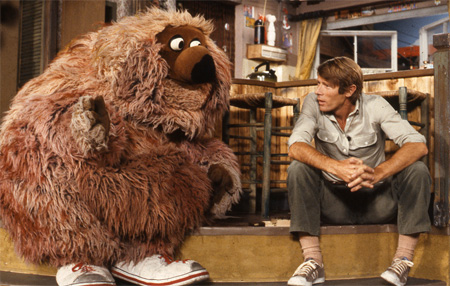
Watching the American Sesame Street was my first view of a world so different from mine, where children have different skin colors and facial features. It was the America I learned about in school later, the country referred to as the New World, a melting pot of cultures and peoples. In the summer prior to my freshmen year at university, I traveled to the U.S. for the first time. The 3-month trip opened my eyes to looking at the world from a new perspective, comparing my own upbringing and traditions with that of others, and for the first time realizing how special me being German seemed to be to others.
After marrying my American husband and officially immigrating to the United States almost 20 years ago, and while traveling the globe for leisure and business, I only became more intrigued by the idea of a melting pot that collects diversity and creates a common identity. I have witnessed racism in more than one country, but still believe that the American ideology of the founding fathers can overcome discrimination of all kinds.
At a luncheon I hosted in my house a few years ago, a big discussion started around the topic of immigration, and whether borders should be closed or not. Thinking back, all participants where either first generation immigrants (like me), second generation immigrants (like a lot of my friends), married to a foreigner and/or have lived and traveled abroad for years. A very diverse group indeed. My good friend from Taiwan, who had immigrated the same year I did and was married to an American, compared the U.S. to a "mixed salad", rather than a melting pot. I thought it was an interesting metaphor and I knew what she meant. We are all tossed in together, not always melting, but rather co-existing and making the experience just so much more "delicious".
My small neighborhood consists of about 300 households, and it resembles a multicultural microcosm, which is exemplified every morning at the school bus stop, when parents and children mingle for a few minutes. The comfort level at which each of us reaches out to the one that looks different, speaks differently and dresses differently, ranges from "very comfortable" to "very uncomfortable" and everything in between. It is the children that share the bus and school experience every day who have overcome that invisible barrier and are showing us how a melting pot can still exist in a world that sometimes makes it hard for us to see the good in it.
There are two images that keep coming to mind:
1) Two muslim teenage girls, wearing Santa hats on top of their veils during Christmas time, waiting for the school bus to come.
2) A group of young men playing cricket on my son's high school basketball court in the afternoon as I am waiting to pick him up from his band practice. The young men interrupt their game, gather in a corner near the fence, kneel down facing east and pray.
I would have never seen this in my little town where I grew up. And I am happy that my children are growing up in a diverse community, which I hope will enrich their lives on a daily basis as it does mine. Sesame Street is Sesame Street, no matter which language it is broadcast
in and no matter who the big stuffed animal is.
Monday, February 18, 2013
The Inner Quest
This weekend, I had the privilege to work with some very smart and creative people as part of a workshop, that explored what motivates us to reach certain goals.
The workshop was intentionally designed to take place in a nature setting that was far away from the distractions and electronic influences of our suburban/urban lives. The house, nestled by trees, overlooking a beautiful hill with a red barn and fields, generated an immediate feeling of relaxation and reminded me of secluded temples I had encountered on hikes in South Korea.
The house itself felt very warm and peaceful, creating time and space for meditation and music. It was amazing to me how 10 strangers, could reach such personal and emotional levels in such a short time. We had all one thing in common: a love for nature. It was clear that it was the setting of the house, that put us all at ease, the strenuousness of hiking along rocky cliffs, searching for somethings beautiful in the grey winter forests and sharing its beauty with someone else.
During deep meditation exercises, that asked us to focus on sounds around us, whether near or far, it seemed almost as if we detached ourselves from the physical place that we had chosen to sit or lie in. I imagined flying above the clouds, moving in one direction, sunlight around me and puffy clouds below. It was an amazing experience, during which we opened our mind and centered ourselves around one thought, one desire, one dream.
Sitting in a circle, sunlight flowing into the room, we prepared ourselves for working as a group as well as an individual by drumming on carved West African drums. A beat was given, we all joined in, copied that beat, played it quieter or louder, slower or faster, until we were all in sync, connected by the deep vibrations that seemed to crawl across the floor and filled the whole room. Some of us added a few additional beats, their own voice and expression, then joined into the communal drumming again. The drumming reduced our heat rate, relieved stress and almost felt like a trance. At the end, we felt energized, ready to start the day.
My personal promise that derived from this peaceful and eclectic weekend? To add more creativity to my daily life, to make it a priority and not wait until we have an open slot on our busy calendars! Nurturing my writing, my photography and learn how to live in the moment from time to time.
The workshop was intentionally designed to take place in a nature setting that was far away from the distractions and electronic influences of our suburban/urban lives. The house, nestled by trees, overlooking a beautiful hill with a red barn and fields, generated an immediate feeling of relaxation and reminded me of secluded temples I had encountered on hikes in South Korea.
The house itself felt very warm and peaceful, creating time and space for meditation and music. It was amazing to me how 10 strangers, could reach such personal and emotional levels in such a short time. We had all one thing in common: a love for nature. It was clear that it was the setting of the house, that put us all at ease, the strenuousness of hiking along rocky cliffs, searching for somethings beautiful in the grey winter forests and sharing its beauty with someone else.
During deep meditation exercises, that asked us to focus on sounds around us, whether near or far, it seemed almost as if we detached ourselves from the physical place that we had chosen to sit or lie in. I imagined flying above the clouds, moving in one direction, sunlight around me and puffy clouds below. It was an amazing experience, during which we opened our mind and centered ourselves around one thought, one desire, one dream.
Sitting in a circle, sunlight flowing into the room, we prepared ourselves for working as a group as well as an individual by drumming on carved West African drums. A beat was given, we all joined in, copied that beat, played it quieter or louder, slower or faster, until we were all in sync, connected by the deep vibrations that seemed to crawl across the floor and filled the whole room. Some of us added a few additional beats, their own voice and expression, then joined into the communal drumming again. The drumming reduced our heat rate, relieved stress and almost felt like a trance. At the end, we felt energized, ready to start the day.
My personal promise that derived from this peaceful and eclectic weekend? To add more creativity to my daily life, to make it a priority and not wait until we have an open slot on our busy calendars! Nurturing my writing, my photography and learn how to live in the moment from time to time.
Wednesday, October 10, 2012
Gigabytes
The other day I happened to be in the Apple Store, looking at different iTouch options with my son. Aside from choosing from two colors, we pondered options for the device's memory capacity - 8 Gigabyte (GB), 16 GB, 32 GB or 64 GB. It did boggle my mind, how such a small device could have that much memory capacity! We decided, that 16 GB was definitely enough, 64 GB was unimaginable and almost too much. Who would use it to that extent? What would you need so much memory on hand for? I kept thinking more about the concept of memory, external harddrives, with the latter one sometimes referring to a stickie note in my busy days or a way to explain to my boys, why we can't remember everything, and need an external harddrive ourselves, aka a stickie note, a journal or calendar, hoping that my technology jargon would enter their memory... and not the junk folder.
It is a subtle line between remembering something in order to do it, or to remember something in order to cherish that memory. We even categorize our memories or place them in the same vicinity in our brain as smell, which sometimes serves as a sort of shortcut or intensifier of memories. In our fast-paced and multitasking world, we don't always take the time to cherish our memories, remembering serves more the purpose of trying to keep all our plates spinning without forgetting one.
What we also forget, is that memories are being made every minute of our day. We may not consciously do so, but we have the opportunity every day to create one special moment, that we want to hold on to for future retrieval. Whether it be sitting around the fire pit in the fall with my family, sipping hot cocoa and roasting marshmallows, or a romantic outing with my husband, a laugh with a friend, snuggling with my pooch and a good book, making that first step towards a new professional endeavor - the list could go on and on - it is a memory, that we each store and cherish in our way, sometimes safer in it's own file, sometimes shared across a network, much like a document on our many electronic devices. Some files get locked, others edited, some are only to be viewed and many get lost.
That iTouch my son decided to buy, might just be one way for him, to make his own memories, but it will never quite replace our wonderful brain, which with the use of all of our senses will make sure that the memory will be as vivid as possible when being surfaced from our neural archives. Memories can lead to story telling, to healing, to connecting with other people - and there is the technology reference again, "connecting to other people". Isn't that what we do via our personal and professional networks on the internet every day? And what about cultivating our memories? There are some memories, that are definitely always on our personal top ten list, we wage those "classics" against new ones, and thereby change the ranking on the list every day. Feel uneasy about how quickly technology becomes outdated or needs an upgrade? Then consider this: we can upgrade our personal memory for free every day! I don't even know exactly how many Gigabytes that would be... but it sure sounds like an enormous amount. Now that is a fantastic deal - don't waste it! Go for that upgrade and pass it on to others.
It is a subtle line between remembering something in order to do it, or to remember something in order to cherish that memory. We even categorize our memories or place them in the same vicinity in our brain as smell, which sometimes serves as a sort of shortcut or intensifier of memories. In our fast-paced and multitasking world, we don't always take the time to cherish our memories, remembering serves more the purpose of trying to keep all our plates spinning without forgetting one.
What we also forget, is that memories are being made every minute of our day. We may not consciously do so, but we have the opportunity every day to create one special moment, that we want to hold on to for future retrieval. Whether it be sitting around the fire pit in the fall with my family, sipping hot cocoa and roasting marshmallows, or a romantic outing with my husband, a laugh with a friend, snuggling with my pooch and a good book, making that first step towards a new professional endeavor - the list could go on and on - it is a memory, that we each store and cherish in our way, sometimes safer in it's own file, sometimes shared across a network, much like a document on our many electronic devices. Some files get locked, others edited, some are only to be viewed and many get lost.
That iTouch my son decided to buy, might just be one way for him, to make his own memories, but it will never quite replace our wonderful brain, which with the use of all of our senses will make sure that the memory will be as vivid as possible when being surfaced from our neural archives. Memories can lead to story telling, to healing, to connecting with other people - and there is the technology reference again, "connecting to other people". Isn't that what we do via our personal and professional networks on the internet every day? And what about cultivating our memories? There are some memories, that are definitely always on our personal top ten list, we wage those "classics" against new ones, and thereby change the ranking on the list every day. Feel uneasy about how quickly technology becomes outdated or needs an upgrade? Then consider this: we can upgrade our personal memory for free every day! I don't even know exactly how many Gigabytes that would be... but it sure sounds like an enormous amount. Now that is a fantastic deal - don't waste it! Go for that upgrade and pass it on to others.
Subscribe to:
Posts (Atom)