Tuesday, October 29, 2013

Die Qual der Wahl (The Torture of Choice)

It dawned on me the other day, how having choices is not necessarily a pleasant reality and can be culturally demanded and/or politically dictated of course.  The German language has this painful term for it:  "Die Qual der Wahl" - "The Torture of Choice", which made me curious about how different cultures deal with choices and needing to choose.

In searching the internet on this topic, I came across a fascinating TED talk by Sheena Iyengar, called "The Art of Choosing", which addressed this topic perfectly:


Ms. Iyengar made the point that I had pondered for a while, how comfortable we are with a) making choices and b) what we define as being a "true" choice.  To most of us, having a choice is an extension of our identity, it defines our own will and ability to distinguish between at least two options, ultimately determining which one is the most beneficial one for us.  That said, it is necessary to assume that we are all equally able to weigh the pros and cons of options on our own, without much outside pressure.

As we think about this in a cultural context, it is important to remember that having choices is equal to a degree of freedom and individuality that not all countries/cultures share equally.  Therefore, some cultures are more comfortable with giving and making choices, whereas other countries/cultures are more comfortable with a higher authority to take on the decision making process.  What I found interesting in the TED talk above, was that choice can be believed to be beneficial for a large number of people, therefore raising the bar for everyone versus other choices being only beneficial to one person or a small group of people.

How does the comfort level of having to make choices translate into real life scenarios?  I certainly had my own experiences over the years from too much choice to hardly any at all:

I remember the first time I went to an American supermarket to buy yogurt, an item which I always thought of being a fairly basic and simple food staple back in Germany.  I was overwhelmed by the choices of yogurt in the dairy section:  non-fat, low-fat, whole milk, pre-stirred, fruit at the bottom, fruit at the top, brand name, store brand, yogurt on sale, etc.  It was almost too much to take in, because I had never realized that there could be potentially so many different types of yogurt - truly experiencing "die Qual der Wahl".  I wondered whether I had lived a life of deprivation, never having to make this kind of choice before ...

In American restaurants I would desperately try to remember the variety of salad dressings that the staff would recite in a friendly way when taking the order.  I was afraid that I would have to ask again, if I did not understand all choices.  After a few of these incidences, I had decided that I would limit my possible choices to "French dressing", so I did not have to go through that torture every time, but rather let the waiter/waitress know exactly what dressing I wanted.

Now, considering the other end of the spectrum, how about not having a choice.  Again, let me take food as an example.  I do remember two incidents, where having a choice was not an option, and yet people accepted it, since that is what THEY were used to all their life.  When I was 14 years old, my family visited our relatives in the former East Germany.  My aunt wanted to prepare breakfast, and asked me and my cousin to go down to the store in their apartment building complex and "see what they have".  Upon entering the well-sized supermarket, I realized that most of the shelves were totally empty. Not much to buy that day.  So instead of being able to prepare a special breakfast for their "Western" relatives, we all made do with what they had at home.  No complaints, no whining, just accepting it.

Years later, my husband and I lived in Ukraine, 8 years after the fall of the Soviet Union.  Albeit living in the country's capital and being far better off than the average Ukrainian, we realized in the winter, that the bazaars had very limited foods to offer, basically only winter produce, such as potatoes, onions, beets and cabbage.  Not being able to eat lettuce for 6 months, we made salad out of cabbage and enjoyed our canned fruits and vegetables that we had shipped along with our other belongings.

During our time in Ukraine, my husband and I had the privilege to serve as election monitors in a small town bordering on Rumania.  After a grueling 24 hour train ride, we arrived at our hotel fittingly called "Drushba" ("Friendship").  We assumed to be the only guests in the concrete building, since we never saw or heard anyone else except for the few hotel staff members, that seemed to be somewhat bored due to the lack of guests. The lobby's lights were turned on and off only when we crossed the entrance area. Hoping to find something warm to eat after only nibbling on sandwiches on the train, we went to the hotel's restaurant.  The waiter was very polite, gave us the menu and said " We don't have anything on here".  We had learned to ask, "What do you have today?" The waiter ensured us that they had the freshest ingredients to make an omelette according to our wishes.  We chose from tomatoes, mushrooms, onions, cheese and ham - it was one of the best omelettes we have ever had.

In Western cultures, we parent by giving our children (preapproved, acceptable) choices, in return making the child feel self-empowered and self-aware of their own dreams, wishes, goals.  In other cultures, parenting is very hierarchical, with the child having to accept choices that their parents already made for them, which can include school, extracurricular activities, university degree, career path, arranged marriages.  It seems right to them, and unacceptable to us.  We tend to reward independent thinking and strong decision making skills.

Each system has its own strengths and weaknesses, and keeps itself in balance through making choice (or lack thereof) a cultural value.  If this value never gets challenged, it remains in place and attains a certain amount of comfort level.  Global expansion, increased travel and opportunities to live in foreign countries, allow us to hold a mirror in front of our cultural values and compare it with those of other people.  The challenge goes both ways:  the lack of choice can feel infantile, limiting, and authoritarian, whereas a wealth of choices can feel overpowering, confusing, unnecessary and risky. When we make a choice, we take a risk.  We assume that by having considered all other options, the one we choose, is the right one.  So, we therefore think of ourselves as informed and intelligent human beings.  The flip side to that way of thinking would be:  we don't have all the information, experience and wisdom to make our choices, and trust someone else to make the decision for us, thus trusting another entity more than ourselves.

When the Berlin wall opened and the Soviet Union eventually fell, millions of people had to learn to make choices for themselves.  They found themselves paralyzed by the many opportunities that suddenly existed, and unfortunately many companies took advantage of these political and economic growing pains by exploiting the inexperience that these people had with making choices. They truly did experience "Die Qual der Wahl", whether it would be opening a bank account, buying competitively priced bank, booking vacations, buying cars, staying in the "East" or moving to the "West", etc.

One young Ukrainian man, whose family had made it their duty to teach my husband and myself everything there was to learn about their country and culture, came to us and asked for advice on job applications.  His university hosted a job fair, where local and foreign companies interested in hiring local employees set up their exhibits.  We advised him on how to write his resume and "market his skills and experience".  The idea of having to "sell" himself scared him, he was used to being assigned a job in a factory after graduation.  No career choice, no torture, just a plan for him.  This wide open land of new opportunities was outside his and many other's comfort zone.

In the research studies undertaken by Sheena Iyengar and presented in the TED talk above, another interesting observation was made: some choices are not viewed as actual choices. Sheena Iyengar used the example of offering different sodas, which to her were different kinds of drinks (Cola, Sprite, Mountain Dew, etc.) but to the group she interviewed, it was no choice, it was just soda.  True choices would have been for example soda, tea, coffee, water, etc.  So, how different do the properties or characteristics of a choice have to be, in order to qualify for being a genuine option? Apparently, very different!

Every day, we make hundreds of choices.  Given more variety, one would assume that making a choice would then become more difficult, since we have to weigh more options.  What would happen if we decide that to offer fewer choices, therefore easing the pain of decision making?  Would less variety lead to fewer choices and ultimately to a decreased individuality?  Living in a culture where the individual is standing in the foreground, I think it would.

Learning to understand other cultures and political systems is vital to these questions.  In a very hierarchical society, the decision making process occurs from the top down.  So it is natural for people to think that someone above them will make the choice for them.  In cultures where the good of the community stands in the foreground, rather than the individual, the group mentality almost automatically demands fewer choices.  The risk starts where political systems limit choices of the individual to the point that it leads to infantilization of a country's population.

I believe we are responsible for our own choices and consequences thereof, so we should also be responsible for limiting ourselves.  I have decided that some choices are unnecessary for me, and I will put these painful struggles to rest once and for all, such as beverage choices at coffee house establishments.  After considering the endless possibilities for ordering that perfect cup of Joe (after successfully accomplishing the first hurdle of basic choice No. 1 "caffeinated or decaffeinated" and the second hurdle of basic choice "small, medium or large"), I CHOOSE to settle for "coffee of the day" from now on. No more torture for me anymore at the coffee shop and in the dairy aisle!




Tuesday, September 24, 2013

Zoom In!

I tend to think of myself as someone who is detail-oriented, yet interested in seeing the big picture, which I LOVE to take apart into tiny, bite size pieces, so that I can see the many pieces that make up the whole.

I used to love childhood books without words, the ones similar to "I Spy Books", were an entire city or landscape would be drawn in folk style, always leaving something to discover.  I loved looking at these books with my own boys when they were younger, making sense of their expanding world in an artistic way.

In my teenage years I became fascinated with biology.  While visiting my uncle, who has an impressive microscope collection, I discovered the big world of things invisible to the human eye.  On a rainy day, my uncle would set up one of his microscopes, and invite me, my sister and cousins to view several objects through the eye tube.  Zooming in, one could see new geometric patterns, different colors or tiny organisms moving.  

Zooming in, digging deeper, scratching below the surface, finding that one special speck that gives the moment meaning and lets everything else move into the background.  This ability does not always require a device, as I found out much later, when I was living in Seoul, South Korea.  Living smack in the middle of this huge and vibrant metropolis of more than 10 million people, not counting the surrounding suburbs and smaller towns that would easily double that number), it could feel very overwhelming.  My family's escape plan in that case would be to recharge our green batteries, oftentimes walking along the Han River. Wildflower fields grew along the bike path, interspersed with willow trees, would create the illusion of a countryside idyll.


If you expanded your field of vision, bridges, high rise apartment buildings, power plants, city highways choked with rush hour traffic and  green mountains in the distance would enter the picture. This was the moment to zoom in!  Put your blinders on for urban sprawl and appreciate this patch of beauty.  

The whole picture of this megalopolis that I learned to call my home and miss when we moved, was taken apart at that moment into a small piece which would give me much appreciation for what it means to see things from a different perspective.


Thursday, August 15, 2013

The Venn Diagram and Cultural Awareness

My son is reading “The Kite Flier” by Khaled Hosseini for his 10 grade English class over the summer, in order to be prepared for the first class discussion.  I was (pleasantly) surprised to see this book assigned, knowing how deeply it  touched myself.  I warned my son in advance of some difficult, yet important passages, reminding him at the same time to keep his mind open for experiencing a glimpse into a culture and country that seems so different and far away from our own.


The public school authority in our county decided to have the book on their reading list in order to raise cultural awareness.  I like that, I embrace diversity and am eager to learn about other cultures and gain a better understanding.  In our daily work as a parents, my husband and I hope to instill this in our own two teenage boys as well.  They are blessed to grow up in a home where we celebrate German and American heritage, with some Welsh and Swedish backgrounds mixed in for added flavor.  We also felt that living in Northern Virginia, we experience many different cultures around us every day, ethnic stores are abundant and places of worship plentiful.


Back to the term “cultural awareness”.  I was curious and researched the term.  In their article “What is Cultural Awareness anyway, and how do I build it?” published by the Culturosity Group, LLC, Stephanie Quappe and Giovanna Cantatore define it as follows: (http://www.culturosity.com/articles/whatisculturalawareness.htm):


Cultural Awareness is the foundation of communication and it involves the ability of standing back from ourselves and becoming aware of our cultural values, beliefs and perceptions. Why do we do things in that way? How do we see the world? Why do we react in that particular way?
Cultural awareness becomes central when we have to interact with people from other cultures. People see, interpret and evaluate things in a different ways. What is considered an appropriate behavior in one culture is frequently inappropriate in another one. Misunderstandings arise when I use my meanings to make sense of your reality.”


I liked that simple way of explaining the core issue of interacting and communicating across cultural boundaries in our global world of existence, where news flash on our screens and teleport us into the daily lives of those in a seemingly different world for just a few moments, only to find ourselves be beamed back into our own cultural comfort zone.


I can see how companies such as “Culturosity Group, LLC” are in high demand with corporate clients whose understanding of cultural synergies is solely based on the awareness of the otherness.  The important thing to remember, though, is to know your own cultural values and beliefs, so that you gain understanding of the differences and use it as a catapult to put yourself in a different cultural context.  Once you are catapulted to the other side, you are immersed in those values and beliefs, allowing you to reflect on your own.  We might find ourselves quickly judging, acting superior with our belief system and feeling very out of place.  This is where cultural awareness starts and turns into cultural understanding, which ultimately embraces diversity.  


When we are able to open up to a different belief system, similarly to when we were sceptic towards new foods and were told “Just try it, you may like it”, we may develop the curiosity to learn about other cultures, be more aware of one another and learn tolerance to accept the differences.  If I think about the two circles in a Venn Diagram representing two cultures, I would have to think that when two cultures become more aware of each other, they move closer together and thus enlarge the middle intersection which houses the similarities of both.


I hope that “The Kite Runner” will be continuing to feed my son’s cultural awareness, and that his class will be able to have a valuable discussion on what it means to have different belief systems, but beyond that realizing that all humans share some very basic needs: love, friendship, acceptance and integrity.  True understanding and acceptance of cultural acceptances will only happen, if these students will have the opportunity one day to live abroad or choose to be in a multicultural relationship.  Becoming aware of and overcoming differences can only be an asset, which may start for some of the students by reading the summer reading assignment.

Tuesday, April 16, 2013

Big Bear Versus Big Bird

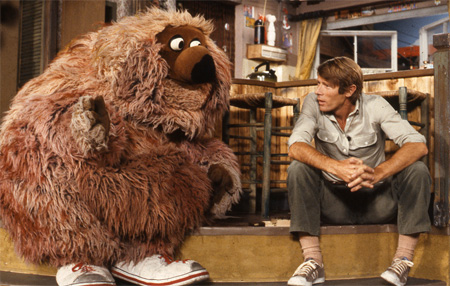
I keep coming back to one of my favorite themes and topics to read and write about:  multiculturalism.  Growing up in a small town in Germany, people looked and acted very homogenous.  As most young children, I liked watching Sesame Street, which in the 70s was the syndicated, dubbed American show, not yet shaped to its German viewers with a big fuzzy bear instead of the yellow big bird children grew up loving in the States.

Watching the American Sesame Street was my first view of a world so different from mine, where children have different skin colors and facial features.  It was the America I learned about in school later, the country referred to as the New World, a melting pot of cultures and peoples.  In the summer prior to my freshmen year at university, I traveled to the U.S. for the first time.  The 3-month trip opened my eyes to looking at the world from a new perspective, comparing my own upbringing and traditions with that of others, and for the first time realizing how special me being German seemed to be to others.

After marrying my American husband and officially immigrating to the United States almost 20 years ago, and while traveling the globe for leisure and business, I only became more intrigued by the idea of a melting pot that collects diversity and creates a common identity.  I have witnessed racism in more than one country, but still believe that the American ideology of the founding fathers can overcome discrimination of all kinds.

At a luncheon I hosted in my house a few years ago, a big discussion started around the topic of immigration, and whether borders should be closed or not.  Thinking back, all participants where either first generation immigrants (like me), second generation immigrants (like a lot of my friends), married to a foreigner and/or have lived and traveled abroad for years.  A very diverse group indeed.  My good friend from Taiwan, who had immigrated the same year I did and was married to an American, compared the U.S. to a "mixed salad", rather than a melting pot.  I thought it was an interesting metaphor  and I knew what she meant.  We are all tossed in together, not always melting, but rather co-existing and making the experience just so much more "delicious".

My small neighborhood consists of about 300 households, and it resembles a multicultural microcosm, which is exemplified every morning at the school bus stop, when parents and children mingle for a few minutes.  The comfort level at which each of us reaches out to the one that looks different, speaks differently and dresses differently, ranges from "very comfortable" to "very uncomfortable" and everything in between.  It is the children that share the bus and school experience every day who have overcome that invisible barrier and are showing us how a melting pot can still exist in a world that sometimes makes it hard for us to see the good in it.

There are two images that keep coming to mind:
1) Two muslim teenage girls, wearing Santa hats on top of their veils during Christmas time, waiting for the school bus to come.
2) A group of young men playing cricket on my son's high school basketball court in the afternoon as I am waiting to pick him up from his band practice.  The young men interrupt their game, gather in a corner near the fence, kneel down facing east and pray.

I would have never seen this in my little town where I grew up.  And I am happy that my children are growing up in a diverse community, which I hope will enrich their lives on a daily basis as it does mine.  Sesame Street is Sesame Street, no matter which language it is broadcast
in and no matter who the big stuffed animal is.

Monday, February 18, 2013

The Inner Quest

This weekend, I had the privilege to work with some very smart and creative people as part of a workshop, that explored what motivates us to reach certain goals.

The workshop was intentionally designed to take place in a nature setting that was far away from the distractions and electronic influences of our suburban/urban lives.  The house, nestled by trees, overlooking a beautiful hill with a red barn and fields, generated an immediate feeling of relaxation and reminded me of secluded temples I had encountered on hikes in South Korea.

The house itself felt very warm and peaceful, creating time and space for meditation and music.  It was amazing to me how 10 strangers, could reach such personal and emotional levels in such a short time.  We had all one thing in common:  a love for nature.  It was clear that it was the setting of the house, that put us all at ease, the strenuousness of hiking along rocky cliffs, searching for somethings beautiful in the grey winter forests and sharing its beauty with someone else.

During deep meditation exercises, that asked us to focus on sounds around us, whether near or far, it seemed almost as if we detached ourselves from the physical place that we had chosen to sit or lie in.  I imagined flying above the clouds, moving in one direction, sunlight around me and puffy clouds below.  It was an amazing experience, during which we opened our mind and centered ourselves around one thought, one desire, one dream.

Sitting in a circle, sunlight flowing into the room, we prepared ourselves for working as a group as well as an individual by drumming on carved West African drums.  A beat was given, we all joined in, copied that beat, played it quieter or louder, slower or faster, until we were all in sync, connected by the deep vibrations that seemed to crawl across the floor and filled the whole room.  Some of us added a few additional beats, their own voice and expression, then joined into the communal drumming again.  The drumming reduced our heat rate, relieved stress and almost felt like a trance.  At the end, we felt energized, ready to start the day.

My personal promise that derived from this peaceful and eclectic weekend?  To add more creativity to my daily life, to make it a priority and not wait until we have an open slot on our busy calendars!  Nurturing my writing, my photography and learn how to live in the moment from time to time.

Wednesday, October 10, 2012

Gigabytes

The other day I happened to be in the Apple Store, looking at different iTouch options with my son.  Aside from choosing from two colors, we pondered options for the device's memory capacity - 8 Gigabyte (GB), 16 GB, 32 GB or 64 GB.  It did boggle my mind, how such a small device could have that much memory capacity!  We decided, that 16 GB was definitely enough, 64 GB was unimaginable and almost too much.  Who would use it to that extent?  What would you need so much memory on hand for?  I kept thinking more about the concept of memory, external harddrives, with the latter one sometimes referring to a stickie note in my busy days or a way to explain to my boys, why we can't remember everything, and need an external harddrive ourselves, aka a stickie note, a journal or calendar, hoping that my technology jargon would enter their memory... and not the junk folder.

It is a subtle line between remembering something in order to do it,  or to remember something in order to cherish that memory.  We even categorize our memories or place them in the same vicinity in our brain as smell, which sometimes serves as a sort of shortcut or intensifier of memories.  In our fast-paced and multitasking world, we don't always take the time to cherish our memories, remembering serves more the purpose of trying to keep all our plates spinning without forgetting one.

What we also forget, is that memories are being made every minute of our day.  We may not consciously do so, but we have the opportunity every day to create one special moment, that we want to hold on to for future retrieval.  Whether it be sitting around the fire pit in the fall with my family, sipping hot cocoa and roasting marshmallows, or a romantic outing with my husband, a laugh with a friend, snuggling with my pooch and a good book, making that first step towards a new professional endeavor - the list could go on and on - it is a memory, that we each store and cherish in our way, sometimes safer in it's own file, sometimes shared across a network, much like a document on our many electronic devices.  Some files get locked,  others edited, some are only to be viewed and many get lost.  

That iTouch my son decided to buy, might just be one way for him, to make his own memories, but it will never quite replace our wonderful brain, which with the use of all of our senses will make sure that the memory will be as vivid as possible when being surfaced from our neural archives.  Memories can lead to story telling, to healing, to connecting with other people - and there is the technology reference again, "connecting to other people".  Isn't that what we do via our personal and professional networks on the internet every day?  And what about cultivating our memories?  There are some memories, that are definitely always on our personal top ten list, we wage those "classics" against new ones, and thereby change the ranking on the list every day.  Feel uneasy about how quickly technology becomes outdated or needs an upgrade?  Then consider this:  we can upgrade our personal memory for free every day!  I don't even know exactly how many Gigabytes that would be... but it sure sounds like an enormous amount.  Now that is a fantastic deal - don't waste it!  Go for that upgrade and pass it on to others.

Monday, August 6, 2012

History's Forgotten Coast

My family just returned from our first trip to Florida.  Most people assumed, that having two children, we probably ventured on the mandatory odyssey to any of the top theme parks located in that state.  Much to the amazement of others - we did not.  As a matter of fact, we have never even gone to any roller coaster park as a family, partly because two of the family members do not do well physically while being strapped into cars that race at lighting speed across a track or seem to be dropped from outer space.  At the end, we saved a lot of money and stuck to our family mantra to travel off the beaten path.  Our google search criteria always includes the word "secluded".

With pooch in tow (well, not literally of course), we drove south, excited to see a new part of the country.  As we succumbed to the monotony of Interstate 95, we eventually noticed that the vegetation started to change.  Among the leafy hardwood trees that we are used to in our region, more and more pine trees, palmetto palms and Spanish moss appeared, indicating, that the soil structure changed from heavy clay to sandier ground.  The landscape was interspersed with swamps and wetlands, naked tree stumps sticking out like skinny arms.  It reminded me of swamp scenes in "Lord of the Rings" .

Eventually we left the well-known East coast traffic corridor with its neverending string of cookie cutter rest stops - one looking like the last one:  truck stop, gas stations, fast food chains - and took off on Interstate 10, which stirred up a bit of nostalgia in my Los Angeles born husband.  He thought the sign should read his California City of Angels as the final destination.  Off we went, deeper into the south, where people use "y'all" and have a lovely accent, yet turning onto a lesser known highway until we hit the gulf coast.  We were amazed at how flat the land was, the gulf was still and stretched until the horizon, a few huge white thunder clouds in the distance decorating the top if the line, where the sky meets the water.

Our island retreat on St. George Island was everything we had yearned for:  remote, quiet, unknown, a virgin tourist paradise.  There was not much to research online about this place, and it seemed to fit its Floridian nickname "The Forgotten Coast".  The nearest town was "Apalachicola", where we could stock our fridge at the local Piggly Wiggly, which had its own smokehouse in the parking lot - great rotisserie chicken!

One afternoon, we had to give in to our location's spot on the map, and venture out to find an Internet cafe of some sort.  Thank Goodness, there was no Starbucks or similar establishments, but a very charming, artsy and warm coffeehouse on the riverfront, owned by a Venezuelan woman and run by a French man.  On the handwritten coffee menu, it said in white chalk "Wir sprechen Deutsch" - "We speak German".  Now, German tourists can be found almost anywhere on this planet, but in Apalachicola, Florida - far away from the Everglades and Key West?  I was curious and had to ask.  It turned out that the French gentleman behind the counter spoke fluent German, we had a quick conversation and it seemed to me that he did not want to share why he decided to stay in this part of the United States, other than for its natural beauty and artsy flair, a place, where people are proud of their history and always have a little story to share.  He admitted he would much rather live in New York, but feeling that living right here, in that little town, may not have been his choice, I left it at that.  I am sure he had a very good reason.  So, I enjoyed the fact that people came and went into the coffeehouse, greeting him by his first name.  He whistled and sang while making coffee, later he pointed out his paintings on the wall next to other local artists.

Being more curious about this place, my husband and I ventured out to get a feel for this town of fishermen.  It reminded us of some outpost in the Wild West, a place where you would have seen saloons, markets and small hotels - a historic crossroad, where people from all walks of life and all parts of the world may have come for business, news or ship repairs.  And so it was!  Reaching the riverfront again after looping through the town, we came to a tiny park, where we saw a historic plaque. It said:" When the River was King".  Form reading the sign, we learned that Apalachicola was a thriving port town in the 1800s, in fact, it used to be the third largest cotton trading city and ran a dominant fish canning industry, with domestic and foreign steamboats docking on this river inlet from the gulf.  Where we were standing, one was able to imagine the bustle of a port town about 150 years ago, that made up to $14,000,000,000 in business in 1860!  Despite the dollar being worth less then, it was still an amazing number and ranked Apalachicola before Boston Harbor in terms of trade volume. How rich it must have been.  Markets and hotels, even a French consulate once lined this street and named the town "Queen of the River".

Today, you don't see the wealth, but you do see potential, just like the young artist from France.  It is a quaint town, the sticky summer heat gives it something nostalgic with folks taking it easy on the front porch during the heat of the day.  Adventurers and hopefuls have started small shops and restaurants, I real venture capital.  The local owner of an antique shop shares her story of growing up here, when she owned nothing but her clothes, her doll and a bike when she was in third grade.  So different from her grandchildren, she tells me, they know how to work those computers and own ATVs.  Despite her daughter's criticism, she still has her doll in her bedroom - there is a cute wicker bed in the store next door, she shares, it would be perfect for that doll and would fit her wicker bedroom furniture at home.  But that young business lady from next door is new, she charges too much and opens her store late.  There is that suspicion towards the hopefuls from outside this town.

A little further down we come across a more traditional souvenir store, signs of "Tupela Honey" have caught our eye.  We had seen signs before, along the country rode, where old men were selling homemade honey among Spanish moss covered oaks.  Entering the store, the owner greets us enthusiastically, engages us into a conversation very quickly, and before we even realize what happend, we are part of an expert lecture about Tupela Honey.  We learn to look for just the right color, the proper yellow bottle cap and understand that the Tupela flower grows in the swamps up the river and will only produce the purest honey for two weeks in the spring.  This honey never crystalizes and due to a different kind of sugar is good for diabetics.  Of course we had to buy a bottle!  Our son was mesmerized by the old-fashioned cash register - no laser scanner, but lots of brass colored buttons, a ring and a huge drawer pushing open!  And just like you would expect in a small town, our offspring was asked to come behind the counter and give the register a try himself.  How cool was that!

We left the gulf coast amazed by the fact, that we had never know about this area, how lucky we were to find it and how we could never live here since getting here meant driving through some very poor looking towns, whose glimmer was lost when the railway stopped to connect these communities to the rest of the country during the hay day of the industrial age.  People are still fishermen down here, like they have always been, going out in tiny wooden boats with tongs used for scraping the ground for oysters.  They have learned to live with the weather, the humidity, the flooding, the storms. These folks are resilient and they have not forgotten their history!